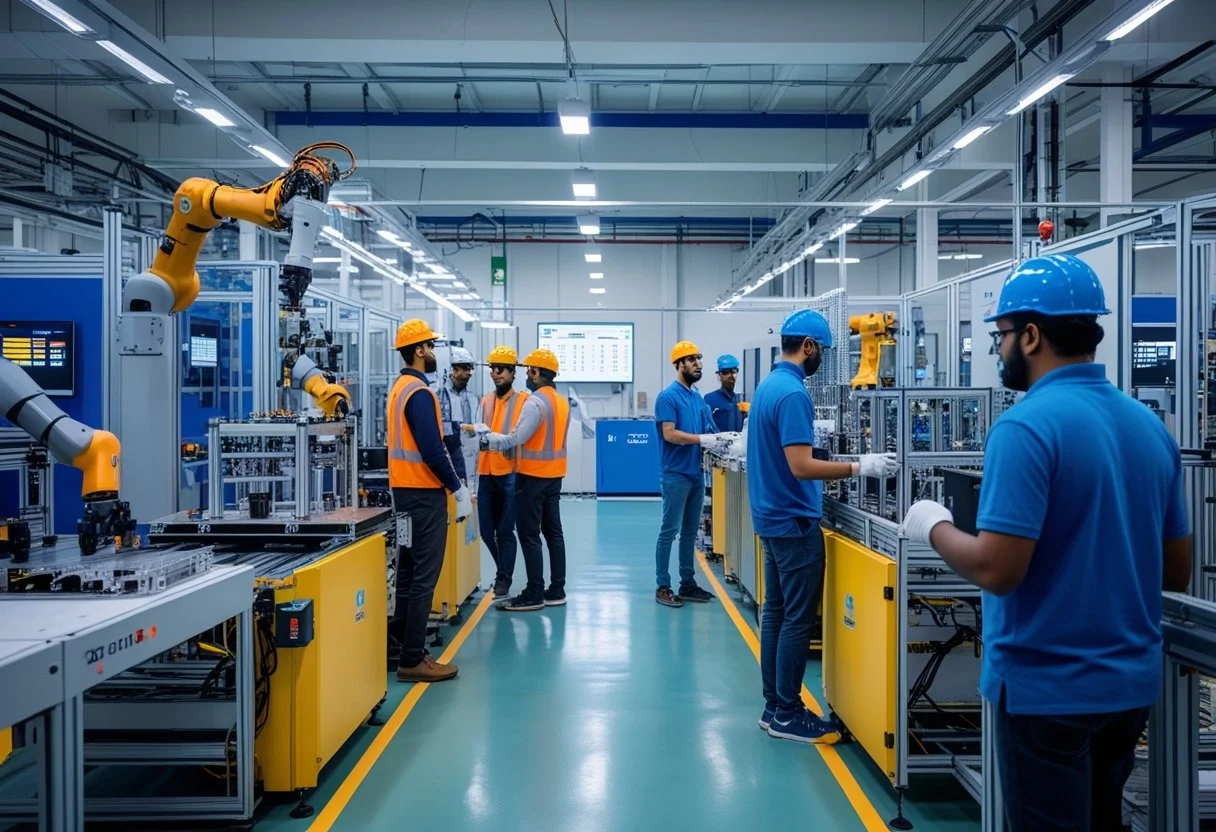
Manufacturing your first product in India can feel daunting at first, but honestly, it's more doable than it might seem. The country’s got a solid network of skilled manufacturers, reasonable production costs, and a growing ecosystem that’s friendly to small businesses. Whether you’re launching a fresh brand or finally making that idea real, India’s got the tools to help you turn concepts into actual products.
To manufacture your first product in India, you’ll need to prep your design, pick the right manufacturing process and materials, find a reliable manufacturing partner, create prototypes, and scale up to full production while keeping an eye on costs and quality control. Breaking it down into steps makes it less intimidating, even if you’re totally new to this. You really don’t need a fortune or years of experience to get started.
This guide covers each stage, from working with manufacturers and understanding costs to avoiding rookie mistakes. By the end, you’ll have a practical roadmap to get your product from idea to reality.
Key Takeaways
- Manufacturing in India means preparing your design, picking materials and processes, and finding the right manufacturing partner
- Prototyping lets you test and tweak your product before committing to big production runs
- Knowing about regional manufacturing hubs and cost structures helps you make smarter choices and scale up
Introduction: Your Product Manufacturing Journey Starts Here
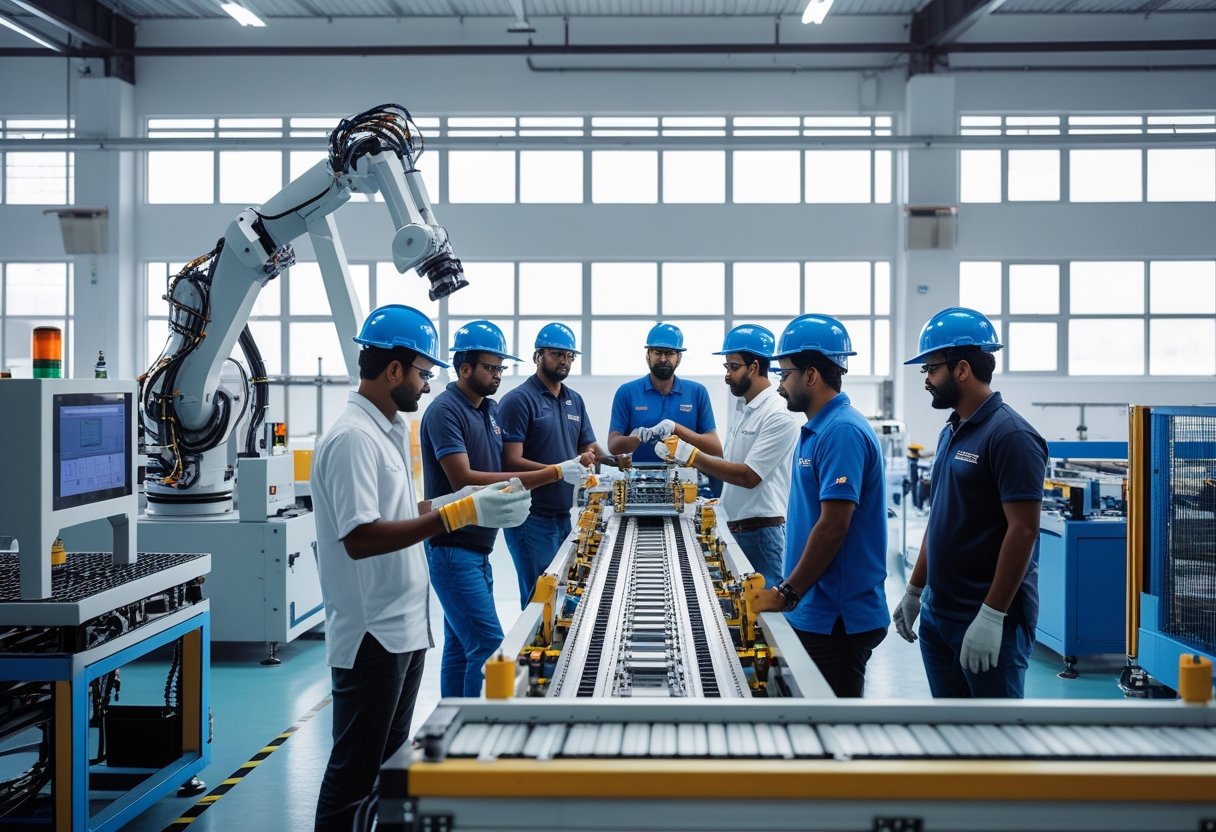
You’ve got a product idea and want to bring it to life in India. Sure, it can feel overwhelming, but there’s a well-trodden path that plenty of startups have followed before you.
India’s a good place for new manufacturers. There’s a huge network of suppliers, skilled workers, and factories that actually want to work with small businesses. You can start small and ramp up if your product takes off.
Key benefits of manufacturing in India:
- Lower production costs than lots of other countries
- Access to a wide range of manufacturing options
- More support for startups and new businesses than ever
- Flexible minimum order sizes—great for first-timers
This guide takes you through each step, from concept to holding your finished product. You’ll figure out how to find manufacturers, manage quality, and handle logistics. No need to own a factory or drop a huge investment up front. Some of the best products started with just a few hundred units.
What you’ll get from this guide:
- The basics of product development in India
- How to find and work with manufacturers
- Tips for managing costs and quality
- How to plan your first production run
Whether you’re launching a physical product startup or just testing the waters with a new idea, this step-by-step approach helps you dodge common pitfalls. India’s manufacturing scene is surprisingly open to newcomers who put in the effort to learn.
Understanding Product Manufacturing in India
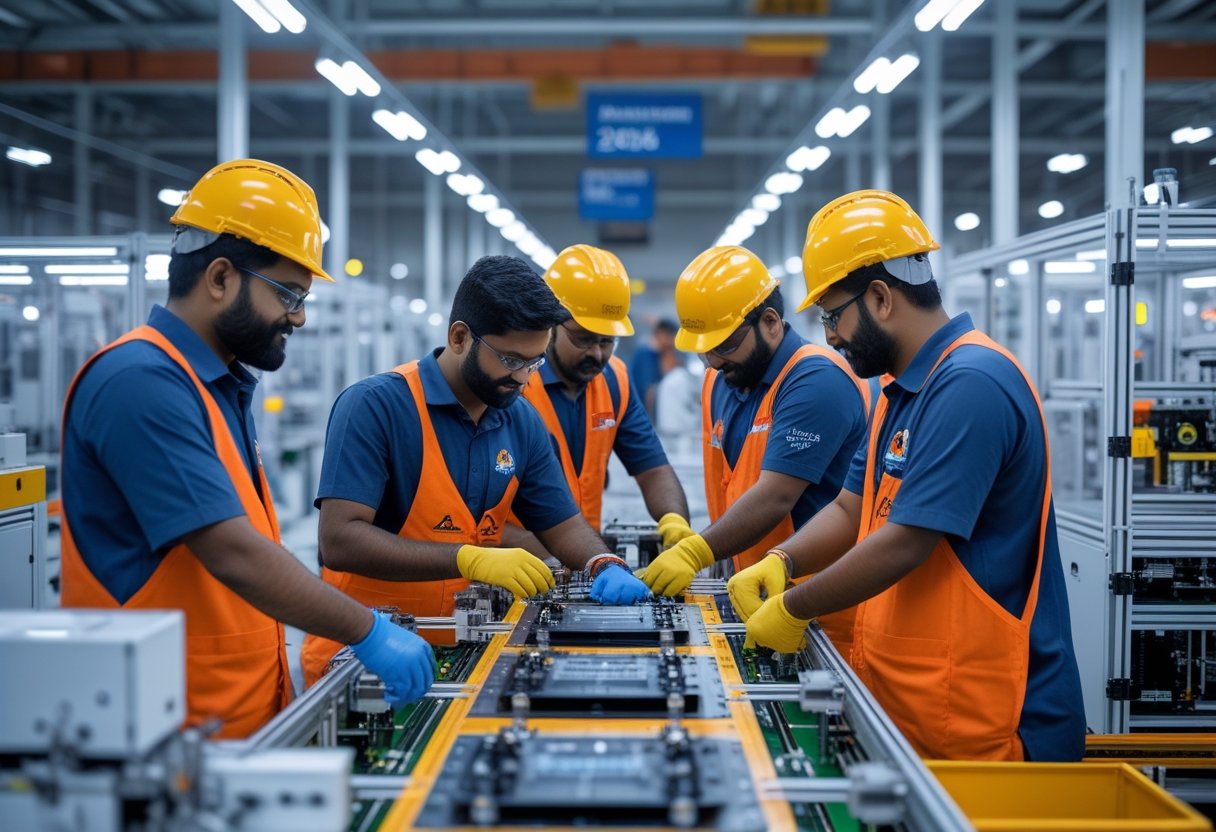
India’s manufacturing scene gives you several options, and costs or timelines can swing a lot depending on your product and the volume you want. New entrepreneurs often miss just how tricky supplier relationships and quality control can get.
Manufacturing Landscape and Options in India
There are three main ways to make your first product in India. Contract manufacturing lets you hand over production to factories that already have the equipment and know-how. It’s a good fit for stuff like packaged foods, cosmetics, or electronics—basically anything that needs specialized gear.
In-house manufacturing means you do everything yourself. That’s a big commitment—you’ll need to rent space, buy machines, hire people, and run the show. It only really makes sense if you’re planning to go big or need to protect some secret sauce in your process.
Small-scale manufacturing is a middle ground. Start with basic equipment in a small workshop or a shared space. This works for handmade goods, simple assemblies, or low-volume specialty stuff. States like Tamil Nadu, Maharashtra, Gujarat, and Haryana are known for their solid manufacturing infrastructure and supplier networks.
Your choice depends on your product and how complex it is. Simple products with existing supply chains are cheaper and quicker to launch than something that needs custom parts or tools.
Common Mistakes First-Time Manufacturers Make
Skipping prototype testing is a huge (and expensive) mistake. You’ve got to validate your design before you buy materials or equipment. Build sample units, put them through their paces, and get feedback from real people.
It’s tempting to pick suppliers just because they’re the cheapest. But low prices can mean poor quality, late deliveries, or hidden costs. Always visit their facilities, ask for client references, and check sample products before signing anything.
Don’t ignore minimum order quantities. Factories often want you to order at least 500 to 5,000 units, depending on what you’re making. Raw material suppliers also have minimums, and that can tie up more cash than you expect.
If you don’t set up solid quality control, you risk shipping defective products. Inspections should happen during production, not just at the end. Make sure you define clear standards and how you’ll check them before you get started.
Realistic Budget and Timeline Expectations
Costs in India depend a lot on how complex your product is and how many you want. For basic stuff with local materials, you might spend ₹50,000 to ₹2 lakhs to get started. If you need imported parts or fancy equipment, it can easily go over ₹10 lakhs.
Typical Cost Breakdown:
- Product development and prototyping: 15-25% of your starting budget
- Raw materials and components: 35-45%
- Manufacturing setup and tooling: 20-30%
- Quality testing and certifications: 10-15%
Expect your first product to take 4 to 8 months from start to finish. Prototyping usually eats up 4-8 weeks, then another 2-4 weeks for testing and tweaks. Finding and checking out manufacturers can take 3-6 weeks. Production itself runs 4-8 weeks, depending on what you’re making and how many you need.
Trying to rush things rarely helps. Suppliers need time to get good materials and keep standards up. Build in a 20-30% buffer for delays—there’s always something unexpected, whether it’s approval holdups or material shortages.
Step 1: Prepare Your Product Design
Your design needs to be finished and ready for manufacturing before you approach any factory. That means detailed CAD files, using design-for-manufacturability basics, and getting feedback from someone who’s been there—otherwise, you could end up with costly mistakes.
Creating Manufacturing-Ready CAD Files
You’ll need 3D CAD files with every detail a manufacturer needs to build your product. Include precise measurements, material choices, tolerances, and clear assembly steps.
Pick CAD software that Indian manufacturers actually use. SolidWorks, AutoCAD, Fusion 360, and FreeCAD are all popular. Most smaller manufacturers like STEP or IGES file formats, so make sure you can export those.
Your CAD files should cover:
- Exact dimensions for each part, down to the millimeter
- Material specs for every component
- Surface finishes and textures you need
- Assembly details so parts fit together the right way
- Tolerances to show what’s acceptable
Don’t forget a Bill of Materials (BOM) listing every part and raw material. This makes it way easier for manufacturers to give you accurate quotes.
Design for Manufacturability (DFM) Basics
Design for manufacturability is about making your product easy and affordable to build. It saves money and headaches down the road.
Keep it simple. Fewer parts mean lower costs and less hassle during assembly. If you can combine parts, do it.
Stick to standard parts and materials you can actually get in India. Custom stuff drives up costs and slows everything down. Double-check what your suppliers have in stock.
Think about the process. For injection molding, add draft angles. For metal work, avoid tricky bends that need pricey tools. Match your design to what Indian manufacturers are set up for.
Don’t use super-tight tolerances unless you have to. Looser tolerances make production cheaper and open up more factory options.
Getting Professional Design Feedback
Have a seasoned design engineer look over your files before you send them to any manufacturer. They’ll catch issues you probably missed.
You can find freelance design engineers on Upwork or Truelancer who know product design for manufacturing in India. Look for people with experience in your product type and who understand what Indian factories can handle.
Share your CAD files and ask about material choices, manufacturing methods, and ways to cut costs. Good engineers will spot tweaks that make your product easier and cheaper to build without sacrificing quality.
Ask for a DFM analysis to flag manufacturing trouble spots—things like undercuts, thin walls, or features that need expensive tools.
Step 2: Choose Your Manufacturing Process
The process you choose affects your product’s cost, quality, and how fast you can make it. Some methods work better for certain materials, batch sizes, or designs.
CNC Machining vs 3D Printing vs Sheet Metal
CNC machining carves material out of solid blocks using computer-guided tools. It’s great for metal and plastic parts that need tight tolerances—precision can be as fine as 0.001 inches. CNC is a solid pick for low to medium runs in India, with costs ranging from ₹500 to ₹5,000 per part, depending on how complicated things get.
3D printing builds parts layer by layer from digital files. It’s perfect for complex shapes and quick prototypes. Indian manufacturers now offer materials like PLA, ABS, nylon, and even some metals. It’s slower than traditional methods, but setup is cheap.
Sheet metal fabrication shapes flat metal sheets by cutting, bending, and welding. This is common in India for enclosures, brackets, and panels. Prices are competitive because there are so many suppliers. Sheet metal is best for simple shapes with bigger surface areas.
Prototyping vs Production Methods
Prototyping is about speed and testing, not cost per unit. Use 3D printing or simple CNC machining to try out your design fast. Most Indian manufacturers can get you a prototype in 5-10 days.
Production methods are about efficiency and repeatability. Injection molding is worth it once you hit 1,000 units in India, with mold costs starting around ₹50,000. It’s the go-to for plastic products at scale.
Don’t expect your prototype method to match your production method. You might use 3D printing for early samples, then switch to injection molding for big orders.
Process Selection Guide by Product Type
Electronic enclosures: Go with sheet metal fabrication or injection molding, depending on your volume. Use CNC machining for metal cases that need precise fits.
Mechanical components: CNC machining is best for metal parts that need strength and precision. For complex shapes at higher volumes, consider investment casting.
Consumer plastic products: Prototype with 3D printing, then switch to injection molding once you’re making more than 500 units. This keeps upfront costs down but lets you scale up.
Custom metal parts: CNC machining is fine for batches under 100. If you’re making 500+ units a month, look at die casting or forging instead.
Step 3: Select the Right Material
Your choice of material shapes your product’s performance, price, and how you’ll actually make it. You’re always juggling strength, weight, what’s available, and what fits your budget—especially if you’re building in India.
Understanding Material Properties and Grades
There are four things you really need to check with any material: tensile strength, hardness, corrosion resistance, and machinability. Tensile strength tells you how much force it’ll take before the thing snaps. Hardness is about how it stands up to wear and tear over time.
Material grade makes as much difference as the type itself. For example, EN8 steel is solid for general engineering, but EN19 steel India is the go-to for high-stress parts like gears. Each grade’s got its own carbon and alloy mix, which tweaks those basic properties.
If your product faces heat, temperature resistance becomes a dealbreaker. Some plastics will droop at 80°C, others shrug off 200°C. Always ask suppliers for material test certificates—don’t just take their word for it.
Metals vs Plastics: What's Right for You
Metals are the classic pick when you need serious strength, heat handling, or electrical conductivity. Indian aluminum suppliers have grades like 6061 for lightweight builds, and 7075 for heavy-duty jobs. Steel’s cheaper for the strength, but it’s heavy.
Engineering plastics India options are pretty wide. ABS is everywhere in consumer goods, nylon’s great for moving parts, and polycarbonate can take a beating. Plastics are lighter on your wallet and tooling is easier. Plus, they don’t rust. They’re perfect for things like covers or handles where brute strength isn’t a must.
It all comes down to what your product needs to survive. A phone case? Go plastic for impact resistance. A motor mount? You’ll want metal to keep things steady.
Material Availability and Cost in India
Start your material hunt by checking what’s actually in stock with distributors in hubs like Mumbai, Delhi, or Bangalore. Mild steel and ABS are everywhere and ship fast. Rarer stuff? Expect to wait 4-6 weeks or even import it.
Price ranges per kilogram (approximate):
- Mild steel: ₹50-70
- EN8 steel: ₹60-80
- Aluminum 6061: ₹250-350
- ABS plastic: ₹150-200
- Nylon: ₹200-300
Small batch or prototype orders cost 15-30% more than big bulk buys. Try ordering test quantities first and push for a better rate once your design’s locked. Indian suppliers often give you a break if you order regularly, not just once.
Step 4: Find Your Manufacturing Partner
Now you’ve got to pick between local workshops and online platforms, and figure out how to read between the lines on manufacturer quotes. Verified manufacturing networks can help dodge common headaches and link you up with reliable partners.
Local Workshops vs Online Platforms
Local shops let you walk in, check out their machines, and meet the crew. It’s hands-on, and you get to see the process up close. This is great if your product’s simple or you want to keep an eye on things.
Online platforms open up a much wider pool. You’ll find CNC shops, injection molders, and all sorts of specialists. You can line up multiple quotes and hunt for exactly the skills you need.
The trade-off? Local shops give you control, but you’re stuck with whoever’s nearby. Online, you get options, but you’ll need to do your homework since you probably won’t visit every place in person.
What to Look for in Manufacturing Quotes
Always get at least three quotes so you know what’s fair. Each one should spell out unit price, minimum order, lead time, and payment terms.
Don’t just chase the lowest price. Sometimes it means corners are being cut. Look at what’s included:
- Material sourcing and costs
- Tooling/setup fees
- Quality checks
- Packing and shipping
- What happens if you need changes or fixes
Ask if they’ve made similar stuff before. Get your hands on samples—don’t just trust photos.
Benefits of Verified Manufacturing Networks
These networks check manufacturers for quality and reliability before they even list them. They look at business papers, certifications, and client feedback.
It lowers the risk of getting burned by a bad partner. If something goes wrong, they usually have dispute resolution and may even hold your payment in escrow until things are sorted.
Lots of manufacturers on these platforms have Udyam Registration, so you know they’re legit MSMEs—not some fly-by-night operation.
Step 5: Prototype Your Product
Prototyping makes your idea real. You get to touch it, break it, and fix it before sinking cash into full-scale production. It’s your chance to catch issues early—and see if your design actually works.
Why Prototyping is Essential
Prototyping saves you from expensive mistakes down the line. When you’ve got a real model in hand, you can check fit, see if your chosen materials behave, and find out if users “get” it.
It’s way easier to show a manufacturer a prototype than explain with drawings and specs. They can use it to nail down costs and spot hiccups that might trip up production.
Getting feedback from real users before you dive into mass production is huge. Hand your prototype to people, watch them use it, and tweak your design based on what you learn. You’ll uncover problems you never saw coming.
Rapid Prototyping Options in India
India’s got a growing rapid prototyping scene. 3D printing is everywhere in cities like Bangalore, Mumbai, and Delhi—expect to pay ₹500-2,000 per model, depending on size and material.
CNC prototyping is your best friend if you need metal or tough plastic parts. These machines carve your design from solid blocks, and services like Partwork can get you a working part in 3-5 days.
Common Prototyping Methods:
- 3D Printing: Great for tricky shapes, ₹500-5,000, 1-3 days
- CNC Machining: For metal parts, ₹3,000-15,000, 3-7 days
- Vacuum Casting: Small batches, ₹5,000-20,000, 5-10 days
- Sheet Metal Fabrication: Enclosures, ₹2,000-10,000, 4-8 days
Most Indian prototyping shops are fine with tiny orders—just one or two pieces. That keeps your costs down while you experiment.
Testing and Iterating Your Design
Start testing your prototype with the basics. Does it actually do what it’s supposed to? Run every feature a few times. Write down every glitch, even the small stuff.
Then, stress test it. If it’s supposed to hold weight, overload it. If it runs on batteries, keep it going until they die. Push those limits and see what gives out first.
Hand the prototype to at least 5-10 people who fit your target market. Don’t tell them how to use it—just watch. Where do they fumble or hesitate? Ask them what they think about the weight, size, comfort, and usability.
Change up your design based on what you learn, then build another prototype. Honestly, most good products go through 3-5 versions before they’re ready. Each round should fix the last batch of issues and get you closer to a design that just works.
Step 6: Understand Manufacturing Costs
Before you kick off production, you need a clear idea of what it’ll cost. Manufacturing in India has a bunch of moving parts, and missing even one can throw your budget off track.
Breaking Down Your Manufacturing Budget
Your costs fall into three buckets: fixed, variable, and overhead. Fixed costs don’t change, like machinery or rent. Variable costs go up as you make more units—think materials and labor per piece.
Overhead covers stuff like utilities, maintenance, and admin. It’s easy to miss, but usually eats up 15-20% of your budget.
Basic Budget Categories:
| Cost Type | Examples | Typical % of Budget |
|---|---|---|
| Materials | Raw materials, packaging | 40-50% |
| Labor | Workers, supervisors | 20-30% |
| Tooling & Equipment | Molds, dies, machinery | 15-25% |
| Overhead | Utilities, maintenance, QC | 10-20% |
Start your cost estimate by listing every single thing you’ll need. Material prices in India jump around by region and supplier, so get at least three quotes. It gives you a realistic baseline and some bargaining power.
Material, Labor, and Tooling Costs
Materials usually eat up the biggest slice of your budget. You want quality, but you can’t blow your whole plan on raw stuff. Bulk orders are cheaper, but you’ll need space and upfront cash.
Labor rates depend on where you are and how skilled your workers need to be. In places like Tamil Nadu or Gujarat, wages are lower than big cities. Assembly workers might cost ₹12,000-18,000 a month; skilled folks, ₹25,000-40,000.
Tooling in India can be all over the map. A basic injection mold might be ₹50,000, but a fancy multi-cavity one can hit ₹5 lakh or more. Metal dies, jigs, and fixtures add to the bill. Machining costs include setup, hourly rates, and finishing.
Most manufacturers will spread tooling costs across your first run. For example, if your mold is ₹1 lakh and you’re making 10,000 pieces, you’ll add ₹10 per unit up front.
Hidden Costs and How to Avoid Them
Hidden costs are the silent killers. Quality rejects can waste 5-10% of your materials, especially in early runs—so plan for some scrap.
Testing and certification fees often blindside new manufacturers. BIS certification, product testing, and safety checks can run from ₹50,000 to ₹3 lakh, depending on what you’re making.
Don’t forget shipping between suppliers, your factory, and customers. There’s packaging, loading, insurance, and storage costs, too.
Common Hidden Costs:
- Sample development and design tweaks (₹10,000-50,000)
- Minimum order sizes that leave you with extra stock
- Rework and quality fixes (budget 5-8% extra)
- Customs and paperwork for imports
- Raw material price swings with the season
To keep costs down, work with partners who show you exactly what you’re paying for. Services like Partwork pricing break it all out. Always ask for itemized quotes—materials, labor, tooling, overhead—don’t settle for a lump sum.
After your first few runs, compare what you actually spent to your estimates. That’s the best way to spot leaks and negotiate better deals next time.
Step 7: Get Quotes and Place Your Order
Getting real quotes from manufacturers is how you figure out the true cost and compare your options. You’ll want to know how to ask for quotes, what details to check, and how payment terms work before you pull the trigger on your first order.
How to Get Instant Manufacturing Quotes
Getting manufacturing quotes is pretty straightforward these days. You can use online platforms or reach out directly to manufacturers. With instant quote systems like Partwork, you just upload your design files and get pricing back in a few hours. Make sure you include all the important details: materials, dimensions, finish, and how many you want.
If you go the traditional route, you’ll need to send a detailed RFQ (Request for Quotation) over email. Attach technical drawings, material specs, quality standards, and your expected timeline. Manufacturers usually get back to you in 2-5 business days with their cost estimates.
Honestly, instant quote platforms are a lot quicker. Upload your CAD files, pick your materials and finishes, punch in your quantities, and you’ll see prices right away. This works best for standard processes like CNC machining, injection molding, or sheet metal work.
Comparing Quotes and Negotiating
Don’t just look at price when comparing manufacturing quotes. Check lead times, certifications, payment terms, and whether things like packaging or shipping are included. It helps to make a simple table to keep track of what each manufacturer is offering.
A cheaper quote isn’t always better—it might mean lower quality materials or less experienced staff. Ask for a breakdown of their pricing: material, labor, tooling, overhead—the works.
Once you have a few quotes, start negotiating. Manufacturers often cut prices for bigger orders, repeat business, or if you’re flexible on delivery. You might also be able to negotiate payment terms, get free samples, or tweak the minimum order quantity requirements.
Understanding MOQ and Payment Terms
Minimum order quantity (MOQ) is just the smallest batch a manufacturer will make. In India, MOQs usually start around 100 units but can go up to 1,000 depending on the product and process. Some manufacturers will do no-MOQ production for simple items, though you’ll pay more per piece for small runs.
Payment terms are usually split—30-50% upfront, then the rest before shipment. Bigger manufacturers might give you 30-60 days credit once you’ve built some trust. Always use secure payment methods and get a written purchase order that covers quantities, prices, delivery dates, and quality standards.
Ask for a proforma invoice before sending any money. Double-check that it lists all costs—tooling, shipping, taxes, the lot. That way, you’re not left with any nasty surprises.
Step 8: Quality Control and Delivery
Quality control checks if your parts actually match your specs, and delivery logistics make sure they arrive safely and on time. Knowing a bit about inspections, tolerances, and how shipping works across India can save you from headaches and unexpected delays.
Setting Quality Standards and Tolerances
Manufacturing tolerances are basically how much your part can deviate from the design. You’ll want to specify dimensional tolerances (like ±0.1mm to ±0.5mm for machined parts), surface finish (Ra values such as Ra 3.2 or Ra 6.3), and get material certifications for your raw materials.
In India, ISO 9001:2015 and BIS standards are common. Always check which standards your manufacturer follows before they start. Remember, tighter tolerances mean higher costs because they need more precise work and equipment.
Provide clear drawings with GD&T symbols or written specs for any critical dimensions. For less important details, you can allow wider ranges to keep costs down without affecting function.
Inspection Methods and What to Expect
Most shops do basic visual checks and measure with calipers or micrometers. For more complex parts, ask for a CMM (Coordinate Measuring Machine) inspection—they’ll give you a detailed report showing how your part matches the CAD model.
Quality control usually happens at three points: when materials arrive, during production, and before shipping. Ask your manufacturer what inspections they do and if you can get those inspection reports with your delivery.
If you want extra peace of mind, services like Partwork quality control offer third-party inspections. Material certificates prove the grade and composition of your metals or plastics.
Delivery Timeline and Pan-India Logistics
Shipping in India depends on where you are and which courier you use. Parts typically go out 2-5 days after production wraps up, with pan-India delivery handled by companies like Delhivery, Blue Dart, or DTDC.
Platforms like Partwork can coordinate shipping from different manufacturers to your address. If you’re in a city, deliveries usually take 3-5 days; remote areas might wait a week or more. Ask for proper packaging to protect delicate or precision parts during transit.
Always track your shipment and check the package before signing. If anything’s damaged or missing, report it right away so you can claim insurance if you have it.
Step 9: Scale from Prototype to Production
Scaling up from prototype to full production takes planning and a solid relationship with your manufacturer. You’ll need to ramp up volumes, keep quality steady, and watch your costs.
When and How to Scale Up
Don’t rush into mass production—wait until you’ve proven customer demand through pre-orders, crowdfunding, or some early sales. Otherwise, you could end up with a warehouse full of unsold stock.
Start with a small batch—maybe 100-500 units. It’s a good way to iron out any kinks in the process before you commit to something bigger. Your manufacturer can help you figure out the minimum order that makes sense for both sides.
Key things to check before scaling:
- Unit costs at different volumes
- Lead times for materials and components
- Tooling and equipment needs
- Quality control capacity at higher volumes
Create a production timeline with your manufacturer. Factor in time for materials, manufacturing, inspections, and shipping. For most small to medium runs in India, you’re looking at 30-60 days from order to delivery.
Managing Production Volume
Break your manufacturing schedule into clear phases. You’ll need to juggle cash flow, inventory, and customer demand.
Set milestones with your manufacturer—dates for materials, production start, inspections, and delivery. Keeping tabs on these helps you spot and fix delays early.
Keep a close eye on your supply chain, especially when scaling up. Your manufacturer depends on their own suppliers for materials and parts, so a hiccup anywhere can stall your whole schedule. It’s smart to ask if they have backup suppliers for critical stuff.
Volume manufacturing checklist:
- Confirm costs at your target volume
- Set quality standards and inspection points
- Agree on payment terms and schedules
- Plan packaging and labeling
- Arrange logistics and shipping
Building Manufacturer Relationships
Your manufacturer isn’t just a supplier—they’re a partner. Pay on time, communicate openly, and respect their know-how.
If you can, visit their facility during the ramp-up. Seeing things firsthand helps you understand their strengths and any limits. You’ll often catch potential issues before they become real problems.
Be upfront about your business plans and growth. It helps them plan ahead, and sometimes they’ll offer better pricing or faster turnaround if they see you’re in it for the long haul.
Set up regular check-ins—WhatsApp, email, whatever works. Weekly calls during production help everyone stay on the same page and nip issues in the bud.
Stay flexible. Sometimes your manufacturer will suggest tweaks to the design or materials that could save money or improve quality. Be open to ideas, but don’t compromise on what really matters for your product.
Regional Manufacturing Hubs in India
Manufacturing in India is clustered in a few regions, each with its own strengths, infrastructure, and networks. Knowing what each area is good at can help you pick the right spot for your product and budget.
Gujarat, Maharashtra, and Tamil Nadu Specializations
Gujarat is big on automotive parts, pharmaceuticals, and chemicals. Rajkot, for example, has loads of machine shops doing precision parts and metal work. With ports like Kandla and Mundra, it’s great for exports.
Maharashtra is India’s industrial heavyweight. Mumbai focuses on pharma, electronics, and consumer goods. Pune is a hub for CNC machining and auto parts, packed with engineering companies. The state has solid logistics and plenty of skilled workers.
Tamil Nadu leads in autos, textiles, and electronics. Coimbatore is famous for pumps, motors, and engineering goods—it’s even called India’s pump city. Chennai anchors the auto sector, and smaller towns are good for cost-effective components and assemblies.
Choosing the Right Region for Your Product
Your product should guide your region choice. For precision engineering or CNC, check out Pune or Bangalore. For automotive, Tamil Nadu and Gujarat have the networks. Electronics? Look at Bangalore or Chennai.
Here’s what to consider:
- Proximity to raw materials—cuts shipping costs
- Skilled workforce—do they know your industry?
- Logistics infrastructure—how easy is shipping?
- Supplier ecosystem—are there enough component makers nearby?
- State incentives and policies
Platforms like Partwork connect you to manufacturers in all these regions, so you can compare options and prices without traveling everywhere. This is especially handy for prototypes or small runs, where flexibility is more important than being local.
Manufacturing with Partwork: The Simplified Approach
Partwork makes Indian manufacturing easier by linking you with vetted suppliers through an online platform. You upload your CAD files, get quotes in seconds, and can kick off production without the usual back-and-forth.
Why First-Time Manufacturers Choose Partwork
If you’re new to manufacturing, finding reliable suppliers and figuring out costs is tough. Partwork takes care of that by giving you access to a network of pre-checked manufacturers across India.
You don’t have to spend weeks chasing factories or stressing over quality. The platform checks every supplier, so you save time and avoid unreliable partners.
Standout perks for startups:
- Multiple manufacturing processes in one place
- No minimum order for prototypes
- Clear, upfront pricing
- Quality assurance from verified partners
Instant Quotes, Verified Manufacturers, DFM Support
Just upload your CAD model and get automatic quotes in seconds. The system checks your files and prices things based on material, quantity, and process.
Every manufacturer on Partwork is verified. You can see their capabilities, past work, and certifications before ordering—no more guessing who’s legit.
Design for Manufacturing (DFM) support helps you catch issues before production. The platform flags things like wall thickness, tolerances, or material choices that could cause problems or add cost.
This kind of feedback can save you a lot of money and hassle. Tweak your design based on expert tips before you hit “go.”
Getting Started in 3 Simple Steps
Step 1: Upload Your CAD Files
Sign up, upload your 3D CAD models (STEP, STL, IGES, etc.), and pick your materials and processes.
Step 2: Review Quotes and Select Manufacturer
Check out instant quotes from multiple verified manufacturers. Compare lead times, capabilities, and customer reviews. Pick what fits your budget and schedule.
Step 3: Place Order and Track Production
Place your order and production starts right away. Track your parts as they move through manufacturing. Get updates on status and estimated delivery through your dashboard.
Frequently Asked Questions
Find answers to common questions about this topic
How much does it cost to manufacture a product in India?
Manufacturing costs in India really depend on what you're making, the materials, and how many you want. For something simple, like a basic plastic part, you might spend ₹10,000-50,000 to get started and run a small batch. More complicated stuff—say, products with electronics or lots of parts—can push you into the ₹1-5 lakh range, sometimes even higher. You'll want to factor in things like tooling, materials, labor, and shipping. Tooling for injection molding is a big one; it can run from ₹50,000 up to ₹3 lakhs, depending on how tricky your part is. Sheet metal tooling is usually a bit easier on the wallet, starting around ₹15,000-30,000. As you order more, your per-unit price drops a lot. For example, a part that costs ₹500 each when you order 100 might only cost ₹150 each if you order 1,000. That’s a pretty big difference.
What is the minimum quantity I need to order?
Minimum order sizes are all over the place, depending on your process and supplier. CNC machining and 3D printing are pretty flexible—you can usually get just one part if that’s all you need. Injection molding is another story; you’re often looking at a minimum of 500-1,000 units because of those upfront tooling costs. Sheet metal shops usually ask for 50-200 pieces at minimum. Some places are happy to do small batches, even 25-50 units, for certain processes. Contract manufacturers set their minimums based on how much setup they need to do. If you’re just starting out, you might be able to negotiate a smaller run, but you’ll pay more per part.
How long does manufacturing take in India?
Timelines really depend on what you’re making and how. For small batches, CNC machining and 3D printing usually take about 1-2 weeks. Injection molding takes longer—plan for 4-8 weeks since they have to make molds first. Sheet metal work is usually done in 2-4 weeks for first orders. If you’ve got electronics, tack on another 2-3 weeks. If your product is complicated or has lots of parts, you could be looking at 8-12 weeks from order to delivery. Don’t forget to add time for samples and tweaks. Most manufacturers will get you a sample in 2-3 weeks to approve before they go full steam ahead.
Do I need CAD files to start manufacturing?
For most modern manufacturing, yeah, you’ll need CAD files. Manufacturers rely on these 3D models to program their machines and get things just right. The usual file types are STEP, IGES, or STL. If you’re starting with just a sketch or a basic drawing, plenty of manufacturers offer design help to turn that into a proper CAD file. That service usually costs ₹5,000-25,000, depending on how complex your product is. You can also find freelance CAD designers in India for ₹500-2,000 per hour. Some simple sheet metal parts can be made from 2D technical drawings, but honestly, CAD files make things smoother and reduce mistakes.
Can I manufacture just one prototype?
Absolutely—you can get a single prototype made using CNC machining or 3D printing. It’s a good way to test your design before you invest in a big production run. Expect to spend anywhere from ₹2,000-20,000 for one, depending on size and complexity. 3D printing is usually the cheapest route for plastic prototypes. If you need a metal one, CNC machining costs more but gives you a part that feels like the real deal. Injection molding doesn’t make sense for just one prototype because of the high tooling costs. You’re better off with CNC or 3D printing until you’re sure about your design.
How do I ensure quality of manufactured parts?
The best way to check quality is to ask for samples before the full order. Look them over—check the size, finish, and whether everything works as it should. Use some calipers or measuring tools to confirm the important dimensions match what you asked for. You can also request inspection reports or certifications from the manufacturer. Many places offer a first article inspection, which documents the measurements of the first batch. If you want extra peace of mind, you can hire a third-party inspection service in India for ₹3,000-10,000 per visit. It helps to keep communication clear and detailed—share your specs, tolerances, and any sample parts you have. If you’re able, visiting the factory can give you a better feel for their process and quality checks.
How do I get started with Partwork?
To kick things off, just upload your CAD files or design specs to the Partwork platform. The system checks out your design and spits out instant quotes for various manufacturing methods. You'll see prices, lead times, and minimum order info all in one spot. Once you're ready, submit your order right on the platform. Usually, you'll get feedback on your design within a day or two. Partwork then matches you up with trusted manufacturers in India who know your product type inside out. Before jumping into full production, you'll have a chance to review samples. All the back-and-forth—payments, communication, quality checks—is handled through the platform. You can log in anytime to keep tabs on your order status and shipping updates.