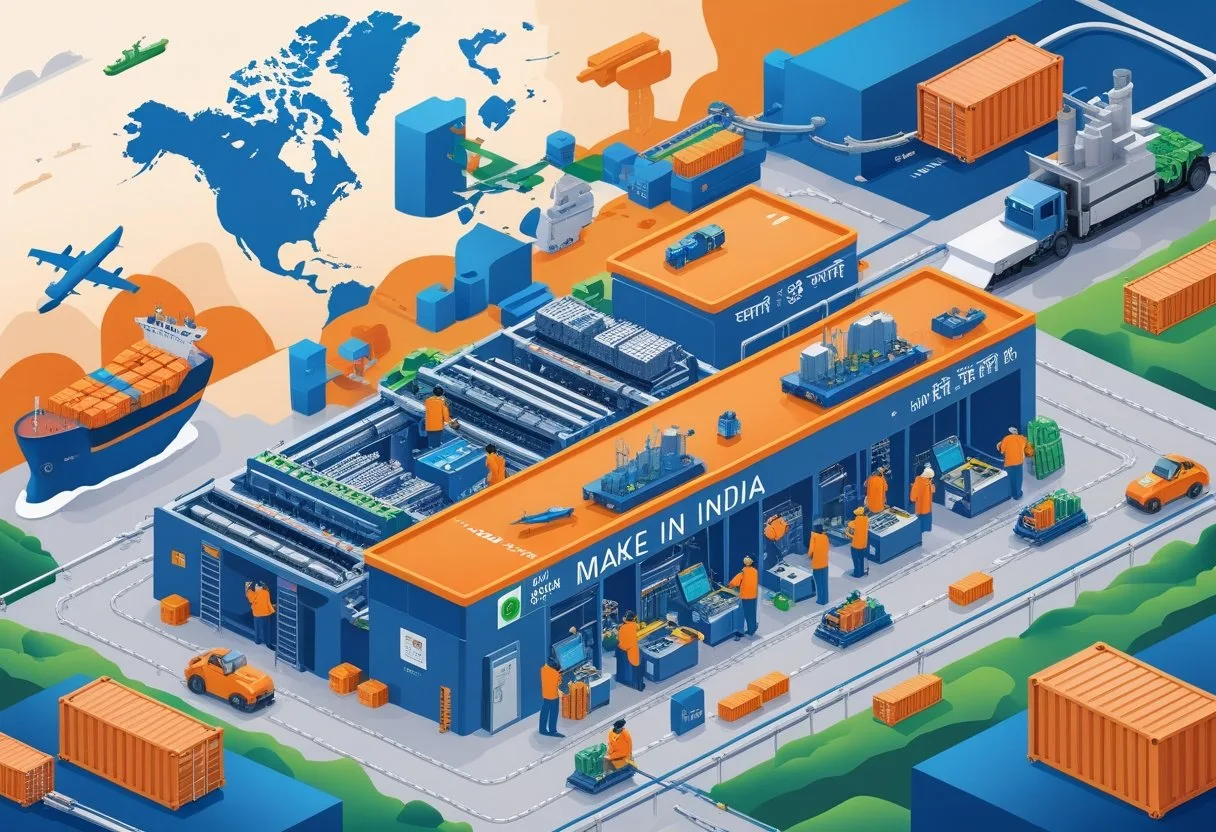
Global companies are rethinking where they make their products. For years, most manufacturing happened in China. Now, businesses are looking for backup options to reduce risk and avoid problems with supply chains. This shift has created a major opportunity for other countries, especially India.
The China+1 strategy means companies keep some manufacturing in China but add India as a second location to spread out their operations and lower risk. India offers large-scale production capabilities, lower costs, and a growing market of over a billion people. The Make in India initiative launched in 2014 has built up the country's manufacturing infrastructure across electronics, automotive, textiles, and other sectors. By 2026, this program has attracted significant foreign investment and created millions of jobs.
Your business can take advantage of this manufacturing shift right now. India has the workforce, government support, and modern manufacturing platforms to help you diversify away from depending only on China. Companies across the world are already moving production to Indian factories in states like Tamil Nadu, Maharashtra, and Gujarat.
Key Takeaways
- The China+1 strategy helps companies reduce risk by adding India as a manufacturing location alongside China
- India offers competitive manufacturing costs, strong government incentives, and access to a massive domestic market
- Modern manufacturing platforms and infrastructure improvements make it easier to start production in India today
The Global Manufacturing Shift to India
Global companies are rethinking where they make their products. Over the past few years, trade tensions, pandemic shutdowns, and rising costs exposed major risks in depending on China alone for manufacturing.
This reality check pushed businesses toward supply chain diversification. Instead of putting all manufacturing in one country, companies now want backup options to reduce risk and keep production running smoothly.
The China+1 strategy has become the standard approach. You don't completely leave China, but you add another manufacturing location to balance your operations. This shift represents one of the biggest changes in global manufacturing in decades.
India is emerging as the top choice for this alternative manufacturing hub. The country offers several advantages that make it attractive for your manufacturing needs:
- Large workforce with growing skills
- Government policies supporting foreign investment
- Improving infrastructure for production and shipping
- Competitive labor costs
- Strong domestic market for goods
Major technology companies have already started moving production to India. Foxconn invested $1.5 billion into its Indian operations as Apple shifts iPhone manufacturing away from complete China dependence.
Your manufacturing services in India can now access better industrial zones, from Coimbatore to Noida. These areas are equipped to handle both small businesses and large multinational operations.
Geopolitical manufacturing trends continue pushing this change forward. Companies recognize that having manufacturing spread across multiple countries protects them from trade disputes, political conflicts, and unexpected shutdowns. India's position as a stable democracy with business-friendly reforms makes it a reliable partner in your global supply chain.
Understanding the China+1 Strategy
Companies worldwide are moving their manufacturing operations beyond China to reduce risk and build more stable supply chains. This shift creates major opportunities for countries like India to attract global investment and grow their manufacturing sectors.
What is China+1 and Why It Matters
The China+1 strategy means companies keep some manufacturing in China but add production in at least one other country. You can think of it as a safety net for your supply chain.
This approach started gaining traction when businesses realized they were too dependent on one country for production. When disruptions happen, companies with operations in only China face serious risks.
Key drivers pushing this strategy include:
- Rising labor and operational costs in China
- Trade tensions between China and Western nations
- Supply chain disruptions during global crises
- Political and regulatory uncertainties
Companies aren't abandoning China completely. They're spreading their manufacturing across multiple locations to protect their business. If one country faces problems, production continues elsewhere without major interruptions.
Global Supply Chain Restructuring
Supply chain diversification has become a top priority for multinational companies. You're seeing a fundamental shift in how businesses think about manufacturing locations.
Companies now evaluate risk differently than before. They look at political stability, trade policies, infrastructure quality, and labor costs across multiple countries. This evaluation leads them to split production between China and alternative manufacturing hubs.
The restructuring process involves significant investment. Businesses must build new facilities, train workers, and establish supplier networks in new countries. Some companies move entire product lines while others shift specific components or processes.
Manufacturing relocation focuses on:
- Electronics and consumer goods
- Textile and apparel production
- Automotive components
- Pharmaceutical supplies
This de-risking approach costs more upfront but protects companies from future disruptions. Your supply chain becomes more resilient when production spans multiple countries.
Countries Benefiting from China+1 (India's Position)
Several countries compete to become the alternate manufacturing hub. Vietnam, Thailand, Malaysia, and India stand out as top choices for companies adopting this strategy.
India has emerged as the most prominent beneficiary. You'll find major investments flowing into Indian manufacturing from global corporations. More than half of U.S. executives plan to increase sourcing or manufacturing in India over the next five years.
India offers advantages that other countries struggle to match. The country has a population of over 1.4 billion people, providing both workers and customers. Infrastructure improvements and business-friendly policies make setting up operations easier than before.
India's competitive edge includes:
- Lower labor costs compared to China
- Large domestic market for products
- English-speaking workforce
- Democratic government and legal system
Companies like Foxconn have invested $1.5 billion into Indian operations. Government programs attract over $520 billion in potential investment and could create more than 6 million jobs by 2025. India's strategic location between major markets strengthens its position in global supply chains.
Make in India Initiative: Overview and Impact
The Make in India initiative has transformed India's manufacturing landscape since 2014 through policy reforms, investment incentives, and infrastructure development. The program has attracted significant foreign direct investment, created millions of jobs, and positioned India as a viable alternative in the global supply chain.
History and Evolution of Make in India
Prime Minister Narendra Modi launched the Make in India initiative in September 2014 during a critical economic period. India's growth rate had dropped to its lowest point in a decade by 2013, and the emerging markets momentum had slowed significantly.
The program started as a response to position India as a global design and manufacturing hub. It aimed to boost the country's manufacturing sector and attract foreign investment across multiple industries.
The initiative has evolved into "Make in India 2.0," which now covers 27 different sectors. This expansion reflects the program's growing scope and ambition. The government identified four main pillars to support the initiative: new processes, new infrastructure, new sectors, and new mindset.
The program prioritizes ease of doing business as the most important factor for promoting entrepreneurship. This focus has led to substantial reforms in how companies can establish and operate manufacturing facilities in India.
Key Policy Reforms and Incentives
The government opened multiple sectors for foreign direct investment to support manufacturing growth. Defence, railways, construction, insurance, pension funds, and medical devices now allow significantly higher FDI participation than before 2014.
Production-Linked Incentive (PLI) schemes represent the most significant policy tool for manufacturing promotion. These schemes offer financial incentives based on production increases and investments in key sectors.
The government has implemented several infrastructure initiatives to support manufacturing:
- Gati Shakti National Master Plan for logistics coordination
- Dedicated Freight Corridors for efficient goods movement
- PM MITRA Mega Textile Parks for textile manufacturing
- National Green Hydrogen Mission for clean energy production
You benefit from streamlined approval processes and reduced regulatory burdens. The government has simplified licensing requirements and reduced the time needed to start manufacturing operations. India now ranks as one of the most open economies globally for foreign investment.
Success Stories and Growth Statistics
The Make in India initiative has delivered measurable results across manufacturing sectors. Foreign direct investment has increased substantially since the program launched. Manufacturing exports have grown, strengthening India's position in global trade.
The electronics manufacturing sector shows remarkable progress. Mobile phone production in India has increased from minimal levels to making the country a major global producer. Several international smartphone companies now manufacture devices in India for domestic and export markets.
The automotive sector has expanded its manufacturing capacity and export capabilities. India produces vehicles for major global brands and has developed a strong auto components industry.
Employment generation stands as a key achievement. The manufacturing sector has created millions of direct and indirect jobs. These opportunities particularly benefit India's young workforce, which needs quality employment options.
The textile and pharmaceutical sectors have strengthened their global market positions. India supplies generic medicines worldwide and has increased textile exports to multiple countries.
Atmanirbhar Bharat and Self-Reliance
Atmanirbhar Bharat, launched in 2020, extends the Make in India vision toward greater self-reliance. This initiative emphasizes reducing import dependence and building domestic manufacturing capabilities across critical sectors.
The self-reliant India approach focuses on five pillars: economy, infrastructure, technology-driven systems, vibrant demography, and demand. You see this strategy implemented through increased local sourcing requirements and support for domestic companies.
The government promotes local manufacturing through various measures. Public procurement policies now favor domestically manufactured goods in many categories. This preference helps Indian manufacturers compete and grow their capabilities.
The PLI scheme specifically supports Atmanirbhar Bharat goals by encouraging production of goods previously imported. Electronics, pharmaceuticals, solar panels, and advanced chemistry cells receive targeted support. These sectors are crucial for reducing your country's import bills and building strategic capabilities.
The initiative aims to integrate India into global value chains while reducing vulnerabilities. You benefit from both increased domestic production capacity and stronger export competitiveness in key manufacturing sectors.
Why India is the Ideal China+1 Destination
India offers a unique combination of cost advantages, skilled labor, political stability, strategic positioning, and market size that makes it stand out among alternative manufacturing destinations. These factors work together to create compelling reasons for your business to consider India as a primary manufacturing hub.
Cost Competitiveness and Labor Advantage
Your manufacturing costs in India can be significantly lower than in China. Labor costs in India remain 30-40% cheaper compared to Chinese wages, giving you immediate savings on your production expenses.
India's cost advantage extends beyond just wages. You benefit from lower land acquisition costs, competitive utility rates, and reasonable raw material prices. The government offers tax incentives and duty exemptions through various schemes that further reduce your operational expenses.
The labor cost differential becomes more pronounced as China's wages continue to rise. Your business can maintain better profit margins while staying competitive in global markets. India's young workforce enters the job market at scale, keeping labor supply stable and costs manageable for the foreseeable future.
Skilled Workforce and Engineering Talent
India produces over 1.5 million engineering graduates annually. This gives you access to a large pool of technical talent for your manufacturing operations. The workforce includes specialists in electronics, mechanical engineering, chemical processing, and textile production.
Your operations benefit from workers who understand modern manufacturing processes and quality standards. Many Indian professionals have experience working with international companies and understand global best practices. The country's education system emphasizes technical skills and problem-solving abilities.
India's English-speaking workforce makes communication easier for your international teams. You face fewer language barriers when coordinating between your home office and Indian facilities. Training programs and skill development initiatives continue to improve worker capabilities across manufacturing sectors.
Democratic Stability and Business Environment
India operates as a stable democracy with established legal systems and property rights. Your investments receive protection under clear regulatory frameworks that have remained consistent across different governments. The country maintains predictable policies that let you plan long-term operations with confidence.
You work within a transparent judicial system where contract disputes get resolved through established legal channels. India's independent courts protect intellectual property rights and enforce business agreements. The government has streamlined business registration processes, reducing bureaucratic delays.
Recent reforms simplified tax structures through the Goods and Services Tax system. You deal with fewer compliance requirements compared to the past. India's Production Linked Incentive schemes offer direct financial support for manufacturing in priority sectors like electronics, pharmaceuticals, and automotive components.
Strategic Geographic Location
India sits at the crossroads of major shipping routes between Europe, Africa, and Asia. Your products reach Middle Eastern markets within days and European markets within two weeks. The country has 12 major ports and over 200 minor ports handling international cargo.
Your supply chain benefits from proximity to Southeast Asian markets and easy access to African economies. India maintains strong trade relationships across regions, giving you diverse export opportunities. The country shares land borders with several nations, enabling overland transport options.
India's location in a different time zone from China provides operational advantages. You can run round-the-clock operations by coordinating between facilities. The geographic separation also reduces your risk from regional disruptions that might affect multiple facilities in the same area.
Growing Domestic Market
India's domestic market includes over 1.4 billion consumers with rising purchasing power. Your manufacturing facility in India serves both export markets and local demand. The middle class continues expanding, creating opportunities for consumer goods, electronics, and automotive products.
You gain first-mover advantages by establishing operations before market saturation occurs. India's consumer spending grows at 8-10% annually in key sectors. The country's urbanization rate increases steadily, concentrating demand in cities with better infrastructure and distribution networks.
Your business reduces shipping costs and import duties by manufacturing locally for the Indian market. Government procurement policies favor locally manufactured goods, opening additional revenue streams. The combination of export potential and domestic demand provides more stable operations compared to export-only manufacturing bases.
Manufacturing Services Available in India
India's manufacturing sector provides a comprehensive range of production services across multiple industries. The country's contract manufacturing capabilities span from precision CNC operations to advanced 3D printing, supported by skilled labor and competitive pricing structures.
CNC Machining Services (Turning, Milling, Drilling)
You can access precise CNC machining services across major Indian manufacturing hubs like Tamil Nadu, Maharashtra, and Gujarat. Indian manufacturers operate modern 3-axis, 4-axis, and 5-axis CNC machines that handle materials including aluminum, steel, brass, titanium, and engineering plastics.
CNC turning services in India produce cylindrical components with tolerances as tight as ±0.005mm. You'll find manufacturers capable of processing parts from 2mm to 500mm in diameter.
Milling operations cover both horizontal and vertical configurations. Indian facilities handle batch sizes from single prototypes to production runs exceeding 100,000 units.
Drilling services include standard, deep hole, and precision boring operations. Many Indian machining centers offer integrated quality control with CMM inspection capabilities.
Key capabilities include:
- Multi-axis simultaneous machining
- Hard turning for hardened materials
- Swiss-type precision turning
- High-speed milling for aluminum components
3D Printing and Additive Manufacturing
India's 3D printing services support multiple technologies including FDM, SLA, SLS, and metal printing. You can source rapid prototyping and low-volume production parts from service providers in Bangalore, Pune, and Delhi NCR.
Material options span standard plastics like PLA and ABS to engineering-grade materials such as nylon, PETG, and flexible TPU. Metal 3D printing services work with stainless steel, titanium, and aluminum alloys.
Indian additive manufacturing facilities serve automotive, aerospace, medical devices, and consumer products sectors. Build volumes range from small desktop printers to industrial systems handling parts up to 500mm x 500mm x 500mm.
Partwork services and similar platforms connect you with verified 3D printing vendors across India. Typical lead times run 3-7 days for plastic parts and 10-15 days for metal components.
Sheet Metal Fabrication and Welding
Sheet metal fabrication services in India process materials from 0.5mm to 25mm thickness. You can order laser cutting, plasma cutting, waterjet cutting, and traditional shearing operations.
Indian fabricators work with mild steel, stainless steel, aluminum, copper, and galvanized sheets. Laser cutting services achieve accuracy within ±0.1mm for parts up to 6 meters in length.
Common forming operations include:
- CNC press brake bending
- Roll forming and tube bending
- Stamping and deep drawing
- Hydroforming for complex shapes
Welding capabilities cover MIG, TIG, spot welding, and robotic welding systems. You'll find ISO-certified welders experienced in structural fabrication, enclosures, brackets, and custom assemblies. Many facilities offer design support to optimize parts for manufacturing and cost reduction.
Injection Molding and Casting
Injection molding services in India operate machines from 50 tons to 2000 tons clamping force. You can produce components ranging from small precision parts weighing grams to large automotive panels exceeding 5 kilograms.
Indian molders process commodity plastics, engineering thermoplastics, and specialized materials like glass-filled nylon and flame-retardant compounds. Tool life typically ranges from 100,000 to 1,000,000 shots depending on material and complexity.
Die casting facilities handle aluminum, zinc, and magnesium alloys. Typical tolerances reach ±0.05mm for critical dimensions.
Sand casting and investment casting services produce parts from 100 grams to several hundred kilograms. You'll find foundries working with cast iron, carbon steel, stainless steel, bronze, and brass. Investment casting achieves surface finishes of Ra 3.2 to Ra 6.3 microns without secondary operations.
Surface Treatment and Finishing Services
You can specify numerous surface treatments from Indian manufacturing service providers. Anodizing services for aluminum parts offer Type II and Type III hard anodizing in various colors and thicknesses from 5 to 100 microns.
Powder coating lines handle batch and conveyor systems with cure ovens accommodating parts up to 3 meters. Standard colors match RAL and Pantone specifications, with texture options from smooth to rough finishes.
Electroplating services include zinc, nickel, chrome, and specialized coatings like electroless nickel. You'll also find PVD and CVD coating services for wear resistance and decorative finishes.
Additional treatments available:
- Passivation for stainless steel
- Phosphating and conversion coatings
- Painting and silk screening
- Polishing and buffing to mirror finishes
Assembly and Integration Services
Contract manufacturing facilities in India provide complete assembly and integration services. You can outsource sub-assembly work, final product assembly, testing, and packaging operations.
Indian assembly services range from simple mechanical fastening to complex electromechanical integration. Many facilities maintain clean room environments for electronics and medical device assembly.
Testing capabilities include functional testing, quality inspections, and performance validation according to your specifications. You'll find manufacturers with experience in box builds, wiring harnesses, and PCB assembly integration.
Kitting and packaging services prepare products for domestic distribution or export shipping. Most facilities offer inventory management, just-in-time delivery, and drop shipping arrangements to support your supply chain requirements.
Key Sectors Driving India's Manufacturing Growth
India's manufacturing expansion centers on six strategic sectors that are attracting billions in investment and creating millions of jobs. These industries combine strong domestic demand with export potential, making them prime beneficiaries of global supply chain diversification.
Electronics and Semiconductor Manufacturing
Electronics manufacturing India has become a critical growth area, with production expected to reach $300 billion by 2026. You'll find major investments flowing into smartphone assembly, consumer electronics, and component manufacturing as companies reduce their China dependence.
Semiconductor manufacturing India is gaining momentum through new fabrication plants and assembly facilities. The government offers incentives worth over $10 billion to attract chip makers. States like Tamil Nadu and Gujarat are building specialized infrastructure for electronics production.
Apple, Samsung, and Xiaomi have expanded their manufacturing operations in India significantly. These facilities now produce phones not just for domestic use but for export to global markets. The sector has created over 1.5 million direct jobs in the past three years.
Key Production Areas:
- Smartphones and mobile devices
- LED and display panels
- Printed circuit boards
- Semiconductor packaging and testing
Automotive and Electric Vehicles
The automotive sector India contributes roughly 7% to the country's GDP and employs over 37 million people. Traditional vehicle manufacturing remains strong, but the real transformation is happening in electric mobility.
EV manufacturing India is expanding rapidly with projected annual production reaching 10 million units by 2030. You can see major automakers like Tata Motors, Mahindra, and Hyundai launching new electric models every quarter. Battery production facilities are coming online to support this growth.
Auto component exports from India exceeded $20 billion in 2025. Companies are building complete supply chains for both conventional and electric vehicles. The PLI scheme for automotive manufacturing has attracted commitments worth $8 billion from domestic and international players.
Foreign brands view India as a production base for right-hand drive vehicles destined for Asian and African markets. The country produces over 5 million passenger vehicles and 25 million two-wheelers annually.
Pharmaceuticals and Medical Devices
Pharma manufacturing India supplies 40% of generic drugs to the United States and 25% of medicines to the United Kingdom. Your country ranks third globally in pharmaceutical production by volume. The sector generates $50 billion in annual revenue with exports accounting for half that amount.
India produces 60,000 generic brands across 60 therapeutic categories. Manufacturing facilities meet stringent international standards, with over 2,000 plants approved by global regulators. The API (active pharmaceutical ingredient) production capacity is expanding to reduce import dependence.
Medical device manufacturing India is growing at 15% annually but still imports 80% of high-end equipment. The government launched a PLI scheme worth $1.4 billion to boost domestic production of devices like CT scanners, MRI machines, and implants.
Focus Areas:
- Generic medications and vaccines
- Active pharmaceutical ingredients
- Surgical instruments and consumables
- Diagnostic equipment and devices
Aerospace and Defense
Aerospace manufacturing India targets $70 billion in production by 2030, with defense equipment accounting for the majority. You'll notice increased private sector participation alongside traditional public sector units.
The government allows 100% foreign direct investment in many defense categories and requires offset obligations for major purchases. Companies like Tata Advanced Systems, Larsen & Toubro, and Bharat Forge are manufacturing aircraft components, drones, and weapons systems.
Defense manufacturing India includes licensed production of fighter jets, helicopters, and naval vessels. Indigenous development programs like the Tejas fighter and Arjun tank complement imported technology. Exports reached $2.5 billion in 2025, marking a 400% increase from five years earlier.
Maintenance, repair, and overhaul (MRO) services for commercial and military aircraft represent a $4 billion opportunity. Several states have established dedicated aerospace parks with testing facilities and skilled workforce training centers.
Textiles and Apparels
Textile manufacturing India employs 45 million workers and generates $150 billion in output annually. The sector represents one of your country's oldest manufacturing strengths with complete value chains from fiber to finished garments.
Cotton textiles dominate production, but technical textiles and synthetic fabrics are growing faster. You can find world-class manufacturing clusters in Gujarat, Tamil Nadu, Maharashtra, and Punjab. These regions handle spinning, weaving, processing, and garment assembly.
Apparel exports face competition from Bangladesh and Vietnam, but India maintains advantages in design capabilities and faster turnaround times. The PLI scheme offers incentives for high-value synthetic and technical textile products.
Production Capabilities:
- Cotton and synthetic yarns
- Woven and knitted fabrics
- Ready-made garments
- Home textiles and furnishings
- Technical and industrial textiles
Engineering and Capital Goods
Engineering goods exports crossed $112 billion in 2025, making this sector a foreign exchange earner. Manufacturing services by industry include production of industrial machinery, heavy equipment, and precision components.
Machine tool production, industrial valves, pumps, and compressors represent core strengths. You'll find Indian manufacturers supplying equipment to construction, mining, oil and gas, and power generation sectors worldwide.
The capital goods sector produces turbines, boilers, material handling equipment, and factory automation systems. Companies are investing in Industry 4.0 technologies to improve precision and reduce costs. This sector benefits directly from infrastructure spending and industrial expansion across manufacturing industries.
Precision engineering for aerospace, automotive, and medical applications is attracting specialized investments. States like Maharashtra, Karnataka, and Tamil Nadu host clusters with advanced machining capabilities and quality certifications required for global customers.
Government Incentives and Support for Manufacturers
The Indian government has rolled out several programs to boost manufacturing and attract global companies looking to diversify beyond China. These initiatives include direct financial incentives, infrastructure benefits, regulatory reforms, and targeted support for small businesses and foreign investors.
Production Linked Incentive (PLI) Schemes
The PLI scheme India launched in 2020 stands as the centerpiece of government efforts to transform the country into a manufacturing hub. This program offers you financial incentives based on your production output and sales growth over a specific period.
The production linked incentive covers 14 key sectors including electronics, automobiles, pharmaceuticals, textiles, and solar equipment. Companies like Waaree Energies Ltd., Adani Enterprises Ltd., and Reliance Industries Ltd. have already benefited from these manufacturing incentives India provides.
The numbers tell a compelling story. The PLI scheme has generated over ₹1.61 lakh crore in private investment and created more than 11.5 lakh jobs. By 2025, these schemes could attract over $520 billion in investment and generate more than 6 million jobs.
Your eligibility depends on meeting specific production targets and quality standards. The incentive rates typically range from 4% to 6% of incremental sales over the base year. India's mobile phone sector shows what's possible—the country transformed from a net importer to the world's second-largest producer through these incentives.
Special Economic Zones (SEZ) Benefits
SEZ benefits India offers give you significant cost advantages when you set up manufacturing operations in designated zones. These areas provide duty-free import of raw materials, capital goods, and components needed for your production.
You get complete income tax exemption for the first five years, 50% exemption for the next five years, and another 50% exemption for five more years on reinvested profits. Additional perks include exemption from state taxes, faster customs clearance, and simplified regulatory procedures.
The zones come with ready infrastructure including power supply, water, roads, and waste management systems. You can also repatriate your profits without restrictions. Over 400 SEZs operate across India in sectors ranging from IT to manufacturing, giving you multiple location options based on your supply chain needs.
Ease of Doing Business Reforms
The government has streamlined regulations to make starting and running your manufacturing business simpler. You can now register your company online within days instead of weeks. Single-window clearance systems let you obtain multiple permits through one portal.
Labor law reforms have consolidated 29 central laws into four labor codes, making compliance easier. You get more flexibility in hiring and managing your workforce. Environmental clearances now use risk-based criteria, so low-risk projects get faster approvals.
The government has also digitized land records and simplified property registration. You can track your applications in real-time and know exactly when you'll receive approvals. These changes cut down the time and cost of setting up operations.
Startup India and MSME Support
If you run a small or medium enterprise, MSME incentives India include priority sector lending at lower interest rates through government banks. You get access to collateral-free loans up to ₹1 crore under the Credit Guarantee Scheme.
The government offers you tax holidays for the first three years of operation. Startup manufacturing support includes funding through the Fund of Funds program, which has committed over ₹10,000 crore to help early-stage companies. You can also apply for grants through the Technology Development Board.
MSMEs benefit from priority in government procurement—25% of government purchases must come from small businesses. You get patent filing fee reductions of up to 80% and access to incubation centers with subsidized workspace and mentoring.
Foreign Direct Investment (FDI) Policies
FDI in manufacturing India allows 100% foreign ownership through the automatic route in most manufacturing sectors. You don't need prior government approval—just file your investment details after setting up.
The government permits you to bring in capital, technology, and expertise without restrictions. You can own land, set up wholly-owned subsidiaries, and repatriate profits freely. Certain sectors like defense allow up to 74% FDI under automatic route and 100% through government approval.
Special provisions exist for companies relocating from China. You get fast-tracked approvals and dedicated support teams to help with land acquisition, permits, and worker recruitment. The government has also signed investment protection agreements with over 80 countries to safeguard your interests.
India's Manufacturing Infrastructure and Capabilities
India has built a strong network of industrial zones and upgraded manufacturing systems to support the China+1 shift. The country now offers better connectivity, modern production technology, and improved quality controls across key manufacturing regions.
Industrial Corridors and Manufacturing Hubs
India operates several dedicated industrial corridors that connect major cities and ports. The Delhi-Mumbai Industrial Corridor spans 1,500 kilometers and links multiple manufacturing clusters. You'll find the Chennai-Bengaluru Industrial Corridor focused on electronics and automotive production.
The government has established 12 major industrial corridors across the country. These zones provide ready infrastructure including power supply, water access, and waste management systems.
Key manufacturing hubs include Coimbatore for textiles and machinery, Noida for electronics, Pune for automotive components, and Ahmedabad for chemicals and pharmaceuticals. Tamil Nadu has emerged as a major electronics manufacturing base with companies setting up phone and component production facilities. Gujarat offers coastal access for export-oriented manufacturing units.
Technology and Advanced Manufacturing
Indian factories are adopting Industry 4.0 technologies to compete globally. You can access automation systems, robotics, and data analytics in modern manufacturing facilities. The Production Linked Incentive (PLI) schemes encourage technology upgrades across 14 sectors including electronics, pharmaceuticals, and automotive parts.
Small and medium manufacturers now use computer-aided design and manufacturing tools. Many facilities have integrated Internet of Things sensors for real-time production monitoring.
Indian companies produce semiconductors, electric vehicle batteries, and precision components. The country has developed capabilities in contract manufacturing for global brands. Partwork manufacturing networks connect smaller suppliers with large export orders, allowing you to scale production quickly.
Quality Standards and Certifications
Indian manufacturers follow international quality standards to meet global buyer requirements. The Bureau of Indian Standards oversees quality certification for domestic and export products. You'll find ISO 9001 certified facilities across major manufacturing sectors.
Many Indian plants hold ISO 14001 environmental certifications and ISO 45001 safety certifications. Electronics manufacturers comply with RoHS standards for hazardous materials. Pharmaceutical facilities meet WHO Good Manufacturing Practice guidelines.
The Quality Council of India works with manufacturers to implement quality management systems. Export-focused units maintain certifications from buyer countries including CE marking for Europe and FDA approval for US medical devices.
Logistics and Connectivity Improvements
India has upgraded ports, highways, and freight systems to reduce shipping times. The Dedicated Freight Corridors cut transit time between major cities by 30-40%. You can move goods from Delhi to Mumbai in under 24 hours using these rail networks.
Major ports like Mundra, JNPT, and Chennai handle containerized cargo efficiently. The government expanded airport cargo capacity at Delhi, Mumbai, and Bengaluru for time-sensitive shipments. The National Highway network now covers over 140,000 kilometers with improved road quality.
The Logistics Ease Across Different States index tracks performance improvements. Coastal shipping routes connect eastern and western manufacturing zones. Inland container depots in Ludhiana, Coimbatore, and other cities provide direct export access to manufacturers located away from ports.
Rise of Digital Manufacturing Platforms in India
Digital manufacturing platforms are reshaping how businesses connect with manufacturers across India. These online marketplaces use cloud technology and automated systems to link buyers with production facilities, offering instant quotes and streamlined communication.
What are Manufacturing Platforms and How They Work
Manufacturing platforms in India operate as online marketplaces that connect you with verified manufacturers. You submit your product specifications, materials, and quantity requirements through a web interface. The platform then matches your project with suitable manufacturers in their network.
The process starts when you upload technical drawings or CAD files. The system analyzes your requirements and sends them to relevant manufacturers. You receive quotes within hours or days instead of weeks. These B2B manufacturing platforms handle communication, payment processing, and quality tracking in one place.
Most platforms verify manufacturers before adding them to their network. They check production capabilities, certifications, and past performance. This vetting process saves you time and reduces risk when sourcing from new suppliers.
Benefits of Using Digital Manufacturing Platforms
You get access to a wide network of manufacturers without traveling or making phone calls. Digital manufacturing platforms cut down sourcing time from weeks to days. The transparent pricing lets you compare quotes quickly and make informed decisions.
Quality control becomes easier through platform monitoring systems. You can track production progress in real-time and communicate directly with manufacturers. Many platforms offer payment protection and dispute resolution services.
Cost savings come from competitive bidding among manufacturers. You avoid intermediaries and their markups. Small and medium businesses can now access manufacturing services that were previously available only to large companies with dedicated sourcing teams.
How Platforms Connect Global Buyers with Indian Manufacturers
Cloud manufacturing India platforms bridge the gap between international buyers and local producers. You can source from Indian manufacturers without establishing a physical presence in the country. The platforms handle language barriers, time zone differences, and payment conversions.
Manufacturing network platforms showcase India's diverse production capabilities. You can find manufacturers for electronics, textiles, automotive parts, and industrial equipment. The platforms provide standardized communication channels and documentation processes.
Instant quote platforms like Partwork and similar services have made it simple to get pricing within 24 hours. Global buyers use these platforms to tap into India's cost advantages while maintaining quality standards. The platforms also help Indian manufacturers reach international markets they couldn't access before.
Technology Behind Modern Manufacturing Platforms
Manufacturing technology platforms use artificial intelligence to match your requirements with the right manufacturers. Machine learning algorithms analyze past projects to improve matching accuracy. Cloud-based systems store all project data, quotes, and communications in one secure location.
API integrations connect these platforms with CAD software, ERP systems, and payment gateways. You can upload designs directly from your design software. Automated systems check files for manufacturability and flag potential issues before production starts.
Real-time tracking uses IoT sensors and manufacturer updates to show production status. Some platforms incorporate blockchain for transparent supply chain tracking. Mobile apps let you manage projects and communicate with manufacturers from anywhere.
Leading Manufacturing Platforms in India
E-manufacturing India has grown rapidly with platforms serving different industry sectors. IndiaMart connects buyers with suppliers across multiple categories, though it focuses more on trading than custom manufacturing. Zetwerk specializes in heavy manufacturing and industrial components with a vetted supplier network.
Partwork offers instant quoting for precision parts and CNC machining services. The platform focuses on quick turnaround times for prototypes and small production runs. Moglix targets B2B procurement with manufacturing capabilities for industrial supplies.
Several platforms focus on specific sectors. PCBWay serves electronics manufacturing, while Fashinza targets textile and apparel production. These specialized platforms understand industry-specific requirements and quality standards.
Online manufacturing platforms India continue to expand their capabilities. They add new technologies like 3D printing, injection molding, and sheet metal fabrication. The platforms are also improving their logistics partnerships to offer door-to-door delivery for international buyers.
Comparing India vs China for Manufacturing
India and China offer distinct advantages for manufacturers, with key differences in costs, production speed, quality standards, supply chain maturity, and available services. Understanding these factors helps you make informed decisions about where to locate your manufacturing operations.
Cost Structure Comparison
Labor costs in India remain 20-30% lower than in China, giving you immediate savings on production expenses. The average manufacturing worker in India earns approximately $150-200 per month, while Chinese workers earn $400-600 monthly. However, you need to consider the total cost picture beyond just wages.
Land and facility costs vary significantly by region. Industrial land in India costs roughly 30-40% less than comparable locations in China's manufacturing hubs. You'll find electricity costs higher in India at $0.08-0.12 per kWh compared to China's $0.06-0.08 per kWh.
Raw material costs depend on your specific industry and sourcing strategy. China's established supplier networks often provide better pricing on components and materials. India requires you to import many specialized materials, adding logistics costs and lead times to your budget.
Tax incentives through programs like Production Linked Incentive schemes can offset 4-6% of your production costs in India. China offers similar incentives but has reduced many export-focused benefits in recent years.
Lead Times and Production Efficiency
China maintains a significant advantage in production efficiency and speed to market. Chinese factories typically operate at 85-95% efficiency compared to India's 65-75% efficiency rates. This gap stems from decades of manufacturing expertise and optimized processes.
You'll experience longer setup times in India, with new production lines taking 3-6 months to reach full capacity versus 1-3 months in China. However, Indian manufacturers are closing this gap through technology adoption and training programs.
Supply lead times for components add 2-4 weeks to Indian production schedules. China's dense supplier ecosystem allows same-day or next-day component delivery. You need to plan inventory buffers carefully when manufacturing in India.
Shipping times to global markets favor different regions. India offers faster access to Middle East and European markets, while China provides better connectivity to North American and East Asian destinations.
Quality and Compliance Standards
Quality standards vary widely across both countries based on facility size and management practices. Top-tier manufacturers in both India and China meet international ISO certifications and industry-specific standards. You'll find approximately 15,000 ISO-certified manufacturers in India compared to over 400,000 in China.
China's quality control systems benefit from mature processes and experienced quality management teams. Indian facilities are improving rapidly but require more hands-on oversight from your team initially. Defect rates in Indian factories average 2-5% compared to 1-3% in established Chinese facilities.
Compliance with international regulations like RoHS, REACH, and CE marking is standard practice in Chinese export manufacturing. Indian manufacturers are building this expertise but you may need to provide additional guidance and verification.
Product consistency across production runs tends to be more stable in Chinese facilities due to standardized processes and automated systems. Indian manufacturers rely more on manual processes, requiring stricter quality checks.
Supply Chain Reliability
China's supply chain infrastructure remains unmatched in depth and breadth. You can source virtually any component within a 50-kilometer radius in major manufacturing clusters. India's supplier networks are growing but lack this density.
Transportation infrastructure presents challenges in India. Port congestion, road conditions, and logistics coordination add unpredictability to your delivery schedules. China's infrastructure supports just-in-time manufacturing with reliable transit times.
Risk diversification now drives many companies to accept some efficiency trade-offs. Political tensions, tariffs, and pandemic-related disruptions make India attractive despite supply chain gaps. You gain geographic separation and reduced concentration risk.
India's domestic market growth provides additional supply chain benefits. You can serve local customers faster and test products before scaling to global markets. This dual approach reduces your overall supply chain vulnerability.
Access to Manufacturing Services
China offers comprehensive manufacturing services spanning design, prototyping, production, assembly, and testing. You'll find specialized expertise in electronics, textiles, machinery, and consumer goods readily available. The ecosystem includes tool makers, testing labs, and packaging specialists within integrated industrial parks.
India's manufacturing services are concentrated in specific sectors. You'll find strong capabilities in pharmaceuticals, automotive components, textiles, and IT hardware. Electronics manufacturing services are expanding rapidly with government support, but China still leads in volume and sophistication.
Contract manufacturing options in India are growing through both domestic companies and international players establishing operations. Companies like Foxconn, Wistron, and Pegatron have built significant capacity in India for electronics assembly. Traditional sectors like automotive and pharmaceuticals offer mature contract manufacturing networks.
Technical support and engineering services differ between the countries. China provides extensive design-for-manufacturing support and rapid prototyping capabilities. India's engineering talent is strong but less integrated into manufacturing workflows, requiring you to coordinate design and production more carefully.
Challenges in Shifting from China to India (And Solutions)
Moving production from China to India involves real obstacles that affect timelines, costs, and product quality. India's infrastructure needs upgrades, supplier networks lack depth, and regulatory processes can slow progress—but emerging solutions address each of these barriers.
Infrastructure Gaps and Modern Solutions
India's infrastructure challenges India directly impact manufacturing timelines and costs. Power outages still occur in some industrial areas. Road quality varies between states, which slows raw material delivery and finished goods transport.
Port congestion adds 3-5 days to shipping schedules compared to Chinese ports. Internet connectivity in Tier 2 and Tier 3 cities where factories operate can be inconsistent.
The government has invested heavily in dedicated freight corridors and industrial parks with reliable utilities. The Delhi-Mumbai Industrial Corridor provides consistent power, modern roads, and streamlined logistics. Smart cities and special economic zones now offer infrastructure comparable to China's manufacturing hubs.
Private investment has also improved warehouse networks and last-mile connectivity. Cold chain facilities have expanded for temperature-sensitive components.
Scale and Production Capacity Issues
Production capacity India remains significantly smaller than China's manufacturing scale. A Chinese factory might produce 100,000 units monthly while an Indian counterpart produces 20,000-30,000 units.
China's manufacturing ecosystem developed over 40 years. Suppliers, component makers, and assembly plants sit within miles of each other. India lacks this clustering in most sectors outside textiles and automotive.
Your lead times will likely increase by 20-40% when you first shift production. Minimum order quantities may be higher as Indian manufacturers build efficiency.
Solutions include:
- Phased migration that maintains some Chinese production during the transition
- Investments in capacity expansion through joint ventures
- Regional manufacturing clusters that are developing in Gujarat, Tamil Nadu, and Maharashtra
- Technology upgrades that improve output per facility
Supplier Discovery and Verification
The supplier ecosystem India presents discovery and trust challenges. You cannot easily verify manufacturer credentials, production capacity, or quality standards without visiting facilities.
Online directories list thousands of suppliers, but many lack certifications or transparent operations. Language barriers complicate technical discussions. Payment terms and contract enforcement differ from Chinese business practices.
Digital manufacturing platforms India now provide verified manufacturer networks. These platforms conduct facility audits, check certifications, and review production capabilities before listing suppliers.
You gain access to pre-vetted partners with documented quality systems. Many platforms offer escrow services and dispute resolution. Communication tools help bridge language gaps with translation services and standardized requirement templates.
Regulatory Navigation
Regulatory compliance India involves multiple layers of federal and state requirements. You need to understand:
- GST registration and filing procedures
- Import-export codes and customs regulations
- Labor laws that vary by state
- Environmental clearances for specific industries
- Quality certification requirements (BIS standards)
State-level regulations add complexity. Maharashtra's labor rules differ from Tamil Nadu's. Each state offers different incentives and has unique approval processes.
Manufacturing solutions India now include compliance consultants who specialize in foreign companies. These experts handle registrations, maintain compliance calendars, and navigate bureaucratic processes.
Industry associations provide guidance on sector-specific regulations. Government portals have improved with online filing systems that reduce paperwork delays.
How Manufacturing Platforms Solve These Challenges
Manufacturing platforms solving challenges bring together verified manufacturers India, compliance support, and logistics coordination. These digital platforms function as intermediaries that reduce risk and speed up production setup.
You submit your product specifications and requirements through the platform. The system matches you with suitable manufacturers based on capabilities, certifications, and capacity. Platform representatives conduct factory audits and quality checks.
Key platform benefits:
| Feature | Benefit |
|---|---|
| Verified supplier networks | Eliminates vetting time and risk |
| Quality monitoring | Regular audits and inspection reports |
| Payment protection | Escrow services until delivery confirmation |
| Logistics coordination | Handles shipping, customs, documentation |
| Compliance management | Ensures regulatory adherence |
Partwork solutions and similar platforms manage the entire production chain. You gain visibility into manufacturing progress through dashboards and reporting tools. Dispute resolution services protect both parties.
These platforms reduce your setup time from 6-12 months to 2-3 months. They lower the knowledge barrier for companies new to Indian manufacturing.
How International Companies are Leveraging Make in India
Major global companies are shifting production to India through partnerships with local manufacturers and direct investments. These international firms are building new factories, expanding existing facilities, and working with Indian suppliers to reduce dependence on China while tapping into India's growing market.
Apple and Electronics Giants in India
Apple has made India a critical manufacturing hub for iPhones. Foxconn invested $1.5 billion into its Indian operations to expand iPhone production capacity. The company now manufactures multiple iPhone models in India, including the latest versions that were previously made only in China.
Pegatron and Wistron also operate major iPhone assembly plants in India. These facilities employ thousands of workers and produce millions of units annually for both domestic sales and export markets.
Samsung operates one of the world's largest mobile phone factories in Noida. The facility manufactures smartphones across all price ranges and serves both Indian and international markets.
Other electronics manufacturers like Xiaomi, Dell, and HP have established production lines in India. They work with contract manufacturers like Dixon Technologies and Amber Enterprises to produce smartphones, laptops, and consumer electronics locally.
Automotive OEMs Expanding Operations
Global automotive companies view India as both a manufacturing base and a major consumer market. Hyundai operates its largest manufacturing facility outside South Korea in Chennai, producing over 700,000 vehicles annually.
Volkswagen Group has invested heavily in its Pune facility. The company manufactures vehicles for brands including Volkswagen, Skoda, and Audi while developing India-specific models for export to other markets.
Tesla has announced plans to enter India with local manufacturing. The company is evaluating sites for production facilities that would serve the Indian market and potentially export to neighboring countries.
Japanese automakers Toyota, Honda, and Suzuki have expanded their Indian operations significantly. Maruti Suzuki, majority-owned by Suzuki Motor Corporation, is India's largest car manufacturer and operates multiple plants with combined capacity exceeding 2 million vehicles.
Medical Device Companies
Medical device manufacturers are establishing production in India to serve the growing healthcare market. Boston Scientific opened a manufacturing facility in Pune to produce cardiac rhythm management devices and endoscopy products.
Abbott operates manufacturing sites in Goa and other locations. These facilities produce diagnostic equipment, nutritional products, and pharmaceutical supplies for Indian and export markets.
Siemens Healthineers manufactures ultrasound systems, CT scanners, and laboratory diagnostics equipment in India. The company uses its Indian operations to serve Asia-Pacific markets and reduce production costs.
GE Healthcare has manufacturing facilities producing imaging equipment and healthcare IT systems. The company employs Indian engineering teams to develop products specifically designed for emerging markets.
European and American Manufacturers
European manufacturers are expanding their Indian footprint beyond automotive. Schneider Electric operates multiple factories producing electrical components, automation systems, and energy management solutions.
Siemens has over 20 manufacturing sites across India. The company produces railway equipment, industrial automation systems, and power generation equipment for domestic use and export.
American manufacturers like Caterpillar and John Deere operate facilities building construction equipment and agricultural machinery. These companies leverage India's engineering talent and lower production costs to serve global markets.
Honeywell manufactures aerospace components, building automation systems, and industrial equipment in India. The company has established research and development centers alongside manufacturing facilities to develop products suited for Indian conditions.
How They Source Manufacturing Services
International companies partner with Indian contract manufacturers rather than building everything themselves. Tata Group companies provide manufacturing services for multiple global brands across electronics, automotive, and industrial sectors.
Mahindra Group offers contract manufacturing for automotive components and electronics. The conglomerate helps foreign companies navigate local regulations and supply chain requirements.
Key sourcing approaches include:
- Joint ventures with established Indian manufacturers
- Contract manufacturing agreements with local firms
- Dedicated supplier parks near main assembly plants
- Technology transfer arrangements for critical components
Dixon Technologies has become a major electronics manufacturing services provider. The company manufactures products for Samsung, Xiaomi, and other global brands under contract arrangements.
You can find specialized manufacturing service providers for nearly every industry in India. These companies handle everything from component sourcing to final assembly, quality control, and logistics. They allow international brands to establish production quickly without building infrastructure from scratch.
India's Regional Manufacturing Strengths and Services
India's manufacturing landscape is distributed across specialized regional hubs, each offering distinct capabilities in sectors ranging from automotive and aerospace to electronics and precision engineering. These manufacturing clusters provide companies with access to skilled labor, established supply chains, and industry-specific infrastructure that support the China+1 strategy.
Gujarat: Engineering, Automotive, and Brass Manufacturing
Gujarat stands as one of India's most industrialized states, with strong capabilities in automotive manufacturing, engineering, and specialized brass production. The state hosts major automotive plants in cities like Sanand and Halol, where both domestic and international manufacturers produce vehicles and components.
The brass manufacturing industry in Jamnagar has earned global recognition for producing high-quality brass components, fittings, and hardware. You can find extensive capabilities in die-casting, forging, and precision machining across Gujarat's industrial centers.
Gujarat's engineering sector extends beyond automotive to include chemical processing equipment, textile machinery, and heavy engineering. The state's proximity to major ports like Mundra and Kandla reduces logistics costs for export-oriented manufacturing. Government initiatives have created dedicated industrial parks with reliable power supply and transport connectivity.
Tamil Nadu: Electronics and Precision Engineering
Tamil Nadu has emerged as a leading destination for electronics manufacturing and precision engineering services. The state produces a significant portion of India's mobile phones, with major brands operating facilities in and around Chennai. Electronics manufacturing extends to components, printed circuit boards, and consumer electronics assembly.
Coimbatore serves as a hub for precision engineering, offering specialized CNC machining, tool and die making, and component manufacturing. You can access hundreds of small and medium enterprises equipped with advanced machining centers, capable of producing parts to tight tolerances for automotive, aerospace, and industrial applications.
The state's manufacturing diversity includes automotive components, pumps, motors, and industrial machinery. Tamil Nadu's technical education infrastructure produces skilled workers and engineers who support these industries. The state benefits from established supply chains and a business-friendly regulatory environment that attracts foreign investment.
Maharashtra: Automotive and Industrial Manufacturing
Maharashtra, particularly the Pune and Aurangabad regions, hosts extensive automotive and industrial manufacturing capabilities. Pune has developed into a major automotive cluster with assembly plants, tier-1 suppliers, and precision component manufacturers supporting both domestic and export markets.
CNC machining services in Pune offer capabilities ranging from prototype development to high-volume production runs. You can find specialized manufacturers for machined components, sheet metal fabrication, and industrial automation equipment throughout the region.
Mumbai and its surrounding areas focus on pharmaceutical manufacturing, chemicals, and consumer goods. The state's industrial corridor connecting Pune, Mumbai, and Nashik provides integrated manufacturing ecosystems with supporting services like quality testing, logistics, and industrial supplies.
Karnataka: Aerospace and Electronics
Karnataka, centered around Bangalore, has established itself as India's aerospace manufacturing hub. The state hosts aircraft manufacturing facilities, aerospace component suppliers, and maintenance, repair, and overhaul (MRO) operations. You can access specialized capabilities in composite materials, precision machining of aerospace-grade metals, and avionics assembly.
Manufacturing in Bangalore extends beyond aerospace to include electronics, biotechnology, and advanced machinery. The city's strong engineering talent pool and research institutions support innovation-driven manufacturing sectors.
The state government has created dedicated aerospace and defense parks with infrastructure tailored to these industries. Electronics manufacturing services in Karnataka range from semiconductor assembly to industrial electronics and telecommunications equipment.
Uttar Pradesh and Delhi NCR: Industrial Corridor
Uttar Pradesh and the Delhi National Capital Region form a growing manufacturing corridor with diverse industrial capabilities. The region specializes in automotive components, consumer durables, and light engineering products. Cities like Noida, Greater Noida, and Ghaziabad host electronics assembly, automotive parts manufacturing, and industrial machinery production.
UP manufacturing zones in cities like Kanpur and Agra focus on leather goods, textiles, and traditional manufacturing sectors alongside modern industrial facilities. The state government has developed industrial parks and special economic zones to attract investment under the China+1 strategy.
The Delhi NCR benefits from proximity to the national capital, access to air cargo facilities, and connectivity to major markets. You can find manufacturers specializing in precision components, electrical equipment, and packaging machinery throughout this region.
Accessing Regional Manufacturing Services
You can access manufacturing services across India's regional hubs through industrial directories, trade associations, and specialized platforms that connect buyers with manufacturers. Partwork and similar platforms offer pan-India manufacturing networks that let you source components and services from multiple regions through a single interface.
Regional manufacturing services typically include prototyping, production machining, fabrication, assembly, and finishing operations. You should evaluate manufacturers based on their certifications, equipment capabilities, production capacity, and quality systems. Many regional clusters have formed industry associations that maintain supplier databases and facilitate connections between buyers and manufacturers.
Working with regional manufacturing hubs requires understanding local business practices, logistics considerations, and regulatory requirements. You can benefit from engaging local agents or using sourcing platforms that provide quality assurance and project management across different manufacturing locations.
Getting Started with Manufacturing Services in India
Starting manufacturing operations in India requires careful planning across supplier selection, regulatory compliance, and sourcing processes. The right approach to partner evaluation and platform selection can significantly reduce setup time and operational risks.
Assessing Your Manufacturing Requirements
You need to define your production specifications before you search for manufacturing partners in India. Start by documenting your product requirements, including materials, quality standards, production volumes, and delivery timelines.
Consider whether you need full-scale production facilities or contract manufacturing services. Your decision affects the business setup India process and investment requirements. Small to medium production runs often work well with existing manufacturers, while large-scale operations might require dedicated facilities.
Calculate your budget for manufacturing, shipping, and quality control. Factor in the costs of regulatory compliance, raw materials, and labor. Indian manufacturing offers competitive pricing, but you should account for initial setup expenses and ongoing operational costs.
Create a clear timeline for when you need production to begin. Lead times for setup manufacturing India vary by industry and complexity, typically ranging from a few weeks to several months.
Finding and Vetting Manufacturing Partners
Start your search by identifying manufacturers that specialize in your product category. Industry associations, trade shows, and manufacturing directories provide initial leads for potential partners in India.
Request detailed information about facilities, certifications, production capacity, and client references. Verified manufacturers India typically hold ISO certifications and industry-specific quality standards. Check for certifications relevant to your market, such as CE, FDA, or BIS approvals.
Visit potential facilities when possible to assess equipment, workforce capabilities, and quality control processes. Virtual factory tours work as an alternative but provide less detail about actual operations.
Review samples and conduct trial production runs before committing to large orders. This helps you evaluate quality consistency and the manufacturer's ability to meet your specifications.
Using Manufacturing Platforms for Quick Sourcing
Online manufacturing platforms streamline the process of sourcing manufacturing services India by connecting you with pre-vetted suppliers. These platforms reduce the time spent searching and screening potential partners.
Digital platforms like Partwork platform offer databases of manufacturers across various industries. You can filter by location, capabilities, certifications, and minimum order quantities. This targeted approach saves weeks compared to traditional sourcing methods.
Many platforms provide secure communication channels and project management tools. These features help you coordinate specifications, timelines, and payments with manufacturing partners India without language or time zone barriers.
Platform-based sourcing typically includes supplier ratings and reviews from other businesses. This feedback helps you make informed decisions about which manufacturers align with your quality and reliability requirements.
Navigating Compliance and Regulations
Manufacturing compliance India starts with registering your business entity. You need to choose between setting up a subsidiary, joint venture, or using a contract manufacturing arrangement. Each structure has different regulatory requirements and tax implications.
Obtain necessary licenses including GST registration, Import Export Code (IEC), and industry-specific permits. Manufacturing operations require factory licenses under state regulations and environmental clearances for certain industries.
Product standards compliance matters for both domestic sales and exports. Your products must meet Bureau of Indian Standards (BIS) requirements for regulated categories. Export products need certifications matching destination market requirements.
Labor law compliance covers minimum wages, employee benefits, and workplace safety standards. Manufacturers must follow the Factories Act and state-specific labor regulations. Partner with local legal advisors to stay current with changing requirements.
Leveraging Instant Quote Systems
Instant quote manufacturing systems speed up the cost estimation process significantly. You upload your specifications, drawings, and requirements to receive automated price quotes within hours instead of days.
These systems work well for standardized manufacturing processes like CNC machining, injection molding, and sheet metal fabrication. The technology analyzes your designs and calculates costs based on materials, labor, and production time.
Compare quotes from multiple manufacturers quickly using these platforms. You can adjust quantities, materials, or specifications to see how changes affect pricing. This transparency helps you optimize designs for cost-effectiveness.
Request detailed breakdowns showing material costs, tooling fees, and per-unit pricing. Understanding the cost structure helps you negotiate better terms and identify areas where design modifications could reduce expenses. Many platforms integrate payment processing and order tracking for seamless transaction management.
How Partwork Enables China+1 Strategy
Partwork provides international companies with a complete digital solution to execute their China+1 strategy through India's manufacturing sector. The platform connects you with verified Indian suppliers while offering transparent pricing, quality assurance, and a nationwide network of manufacturers.
India's Leading Digital Manufacturing Platform
Partwork operates as an online manufacturing platform India that bridges the gap between global buyers and Indian manufacturers. The platform uses digital tools to simplify the sourcing process that traditionally required physical visits and extensive vetting.
You can access the Partwork manufacturing platform to search for manufacturers based on your specific requirements. The system provides instant quote India functionality that delivers pricing within hours rather than weeks. This speed matters when you need to compare Indian manufacturing costs against your existing China operations.
The platform maintains detailed profiles of each manufacturer in its network. You can review capabilities, certifications, past projects, and customer feedback before making contact. This transparency reduces the risk that comes with entering a new manufacturing market.
Comprehensive Manufacturing Services Portfolio
Partwork manufacturing network covers multiple manufacturing processes that support China+1 diversification. The manufacturing services Partwork offers include CNC machining, sheet metal fabrication, injection molding, die casting, and 3D printing.
You can source components across industries including automotive, electronics, industrial equipment, and consumer products. The platform handles both prototype development and volume production runs. This range means you can consolidate multiple suppliers under one digital interface.
Partwork capabilities extend to complex assemblies and custom fabrication work. The verified Indian suppliers on the platform have experience working with international specifications and standards. Many manufacturers in the network already serve global brands and understand export requirements.
Transparent Pricing and Quick Turnaround
The platform provides instant pricing through its automated quoting system. You upload your CAD files and specifications, and the system generates quotes from multiple Partwork verified manufacturers within 24 hours.
This pricing transparency helps you build accurate cost comparisons between China and India. You see detailed breakdowns that include material costs, processing fees, and logistics expenses. The system eliminates hidden costs that often appear later in traditional sourcing arrangements.
Lead times on Partwork are clearly stated upfront. Most manufacturers on the platform can handle standard orders within 2-4 weeks. Rush orders are available when you need faster delivery to maintain production schedules during your transition away from China-only sourcing.
Quality Assurance and Compliance Support
Quality manufacturing India requires consistent standards and verification processes. Partwork implements a multi-stage quality system that starts with manufacturer vetting and continues through production monitoring.
All manufacturers in the Partwork manufacturing network undergo verification before joining the platform. This includes checking certifications like ISO 9001, AS9100, or industry-specific standards. You can filter suppliers based on the quality certifications your products require.
The platform offers inspection services at key production stages. Third-party inspectors can verify dimensions, material specifications, and finish quality before shipment. This quality assurance reduces the defect rates that concern companies moving production to new suppliers.
Partwork for international companies includes support for export documentation and compliance. The platform helps you navigate Indian export regulations, customs paperwork, and shipping logistics that differ from your China operations.
Pan-India Manufacturing Network
The Partwork manufacturing network spans major industrial regions across India. You can access manufacturers in clusters like Pune for automotive, Coimbatore for precision machining, and NCR Delhi for electronics manufacturing.
This geographic distribution gives you options to locate production near ports for export efficiency. Manufacturers in Gujarat provide proximity to major shipping terminals. Tamil Nadu factories offer access to skilled labor pools with manufacturing experience.
You can split production across multiple locations to reduce concentration risk. The platform makes it simple to manage orders with different suppliers while maintaining visibility across your entire India supply chain. This distributed approach supports the core goal of your Partwork China+1 strategy by creating true diversification beyond a single country or region.
Action Plan: Transitioning Manufacturing to India
Moving your manufacturing operations to India requires a structured approach that minimizes risk while maximizing efficiency. A successful shift from China to India involves careful assessment, testing through pilot production, and gradual scaling to full capacity.
Phase 1: Assessment and Platform Selection
You need to start by evaluating your current manufacturing requirements and costs. Compare your China-based production expenses with projected costs in India, including labor, raw materials, logistics, and compliance.
Identify which product lines make sense to move first. Consider items with lower complexity or those facing higher tariffs when produced in China.
Research Indian states that offer incentives for your industry. States like Tamil Nadu, Gujarat, and Maharashtra provide tax breaks and infrastructure support for manufacturers.
Select a manufacturing platform or partner with local expertise. Look for established industrial parks or special economic zones that offer ready infrastructure. These locations provide faster setup times and reduce your initial capital investment.
Create a detailed timeline with clear milestones. Your manufacturing transition plan should span 12-18 months for most operations, though simpler products may move faster.
Phase 2: Pilot Production and Testing
Launch pilot production India operations with a limited product range. Start with 10-20% of your total volume to identify potential issues before full commitment.
Choose a small batch of products that represent your typical manufacturing challenges. This helps you test equipment setup, worker training needs, and quality control processes.
Monitor these key metrics during pilot production:
- Defect rates compared to your China operations
- Production speed and worker efficiency
- Supply chain reliability for raw materials
- Quality consistency across multiple production runs
Work closely with your Indian manufacturing partner to resolve problems quickly. Most issues in this phase relate to worker training, equipment calibration, or local supplier quality.
Set clear success criteria before moving forward. Your pilot should meet at least 90% of your China facility's quality standards and achieve 80% of its production efficiency.
Phase 3: Full-Scale Production and Integration
Gradually increase production volumes once pilot results meet your standards. Scale production India operations in 25% increments to maintain quality control.
Transfer your complete quality management system to the Indian facility. This includes inspection protocols, testing procedures, and documentation requirements.
Integrate your Indian operations into your global supply chain. Update your logistics network to account for new shipping routes and lead times. India's ports like Mumbai, Chennai, and Mundra can handle most international shipping needs.
Train a local management team to oversee daily operations. Reducing your dependence on expatriate staff lowers costs and improves long-term sustainability.
Maintain parallel production in China during the first 6-12 months of full-scale operations. This backup capacity protects you from unexpected disruptions as your Indian facility reaches full efficiency.
Tools and Resources for Smooth Transition
Manufacturing platforms provide essential support during your transition to India manufacturing. These platforms connect you with verified suppliers, handle compliance documentation, and manage quality inspections.
Key platform services include:
- Supplier verification and factory audits
- Regulatory compliance assistance
- Quality control coordination
- Logistics and customs management
Government resources through Invest India offer guidance on permits, incentives, and state-level support programs. The Make in India portal provides sector-specific information and connects you with relevant government agencies.
Industry associations in your sector can provide local market insights and networking opportunities. Groups like CII (Confederation of Indian Industry) and FICCI offer member services that ease market entry.
Consider hiring a local consulting firm for the first year. They navigate bureaucratic processes, interpret regulations, and help you avoid common mistakes that delay production starts.
Conclusion: Seize the Make in India Opportunity with Modern Manufacturing Platforms
India's position as a China+1 alternative has never been stronger. The combination of government support, a young workforce, and competitive costs makes manufacturing in India 2025 an attractive proposition for global businesses.
You can tap into India's manufacturing advantage through several key factors. The country offers a population with a median age of 29 years and over 65% employability. You also gain access to competitive wages and a large domestic market that drives demand.
Modern manufacturing platforms in India provide the infrastructure you need to start quickly. These platforms streamline operations and reduce the complexity of setting up production facilities. Services like Partwork manufacturing solutions offer integrated approaches to help you navigate the Indian manufacturing landscape.
The Make in India opportunity extends across 27 sectors with expanded Production Linked Incentive schemes. You benefit from:
- Simplified business regulations
- Labor reforms that improve flexibility
- Incentives for domestic manufacturing
- Growing export infrastructure
Manufacturing services in India have matured significantly since the initiative launched in 2014. You no longer need to build everything from scratch. Established supply chains, skilled engineers, and quality-focused MSMEs create a supportive ecosystem.
The China+1 India strategy works because you can scale operations while managing risk. You maintain competitive pricing and access both domestic and international markets from a single location.
Your entry into Indian manufacturing becomes smoother when you leverage existing platforms and partnerships. The infrastructure is ready, the talent is available, and the government incentives are in place.
Frequently Asked Questions
Find answers to common questions about this topic
What is the China+1 strategy and why is India important?
The China+1 strategy means you set up manufacturing in another country while keeping some operations in China. This approach reduces your risk if problems happen with suppliers or trade policies in one location. India is important because it offers a large workforce, lower labor costs, and a growing domestic market of over 1.4 billion people. Your company can access skilled workers and tap into government programs designed to attract foreign manufacturers. More than half of U.S. executives plan to increase their manufacturing or sourcing in India over the next five years. Companies like Foxconn have invested $1.5 billion in Indian operations as part of this shift.
What manufacturing services are available in India?
You can find manufacturers in India that handle injection molding, CNC machining, sheet metal fabrication, and plastic parts production. Indian manufacturers also provide assembly services, quality control, and product testing. Many facilities offer contract manufacturing where you provide designs and specifications while they handle production. You can work with small manufacturers for custom orders or large factories for high-volume production runs. Indian manufacturing platforms connect you with verified suppliers across different specialties. These services include prototyping, mass production, packaging, and logistics support.
What incentives does the Indian government offer manufacturers?
The Production Linked Incentive (PLI) scheme gives you financial rewards based on your production output and sales. This program covers 14 sectors including electronics, pharmaceuticals, textiles, and automobile parts. The PLI scheme can attract over $520 billion in investment and create more than 6 million jobs by 2025. You receive incentives as a percentage of your incremental sales over a base year. Your business also benefits from improved infrastructure, streamlined regulations, and tax breaks in special economic zones. The government has reduced approval times and simplified licensing requirements for foreign companies.
Is manufacturing in India cheaper than China?
Manufacturing costs in India are generally lower than China for labor-intensive products. You pay less for wages since Indian labor costs remain competitive compared to rising Chinese wages. Your total costs depend on factors like material sourcing, logistics, and production volume. India offers savings on labor but China may have better infrastructure and established supply chains in some sectors. Energy costs and raw material prices vary by region in both countries. You need to calculate your specific product costs including shipping, duties, and quality control expenses.
How do manufacturing platforms like Partwork help international companies?
Manufacturing platforms connect you with pre-vetted suppliers without requiring site visits or local contacts. You submit your design files and specifications through an online system. Partwork and similar platforms handle supplier matching, quote comparisons, and quality inspections on your behalf. These services reduce the time you spend searching for reliable manufacturers. You get access to multiple manufacturers through one interface instead of contacting dozens of suppliers directly. The platform manages communication, tracks production progress, and arranges shipping to your location.
How can I find reliable manufacturers in India quickly?
Online manufacturing platforms let you upload your requirements and receive quotes within days. You compare prices, lead times, and capabilities from multiple suppliers at once. Trade directories and industry associations provide lists of certified manufacturers by specialty and location. You can check certifications like ISO standards and export licenses before making contact. Working with sourcing agents or consultants gives you local expertise and factory verification services. These professionals visit facilities, check quality systems, and negotiate terms in your interest.