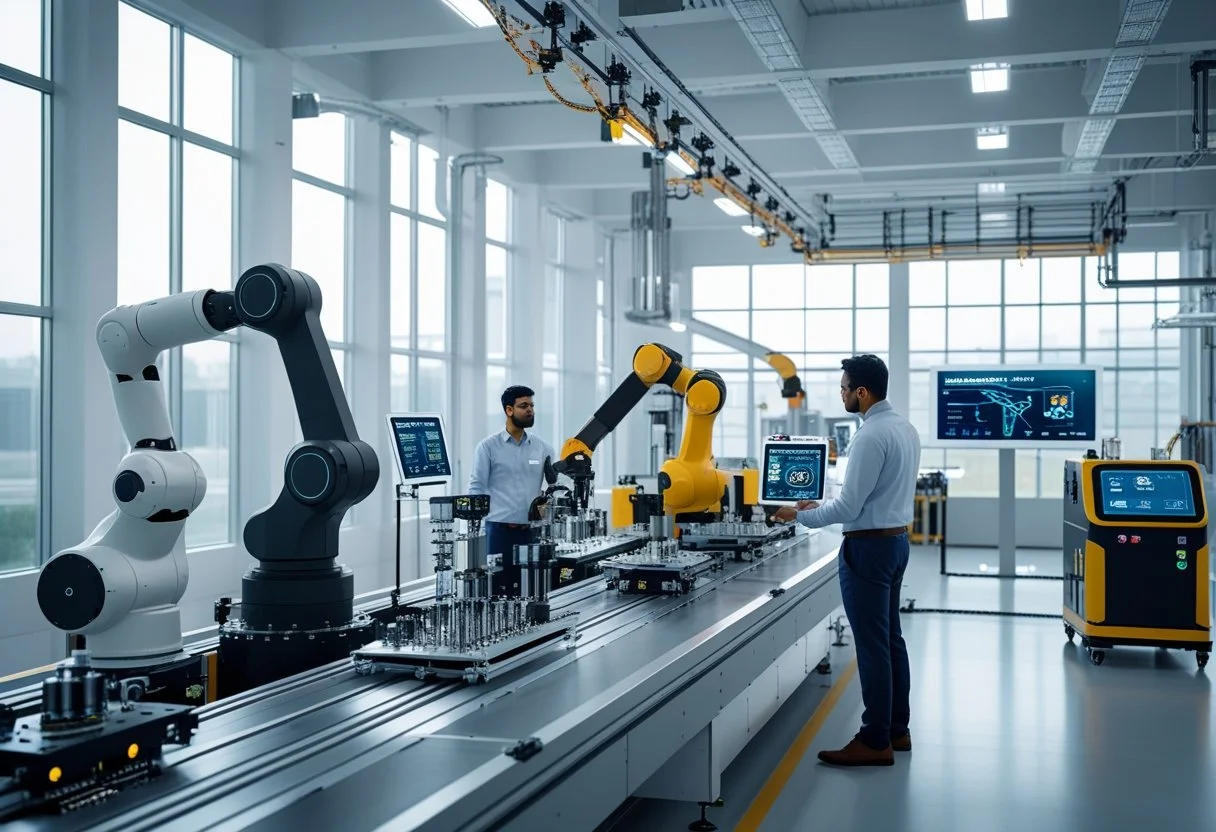
India’s manufacturing scene is in the middle of a real shake-up in 2026. The old way—big orders, months-long waits, and warehouses full of unsold stuff—is slowly making room for something better. On-demand manufacturing means you only make what you need, when you need it. That’s less waste, lower upfront costs, and a lot less stress about inventory.
On-demand manufacturing is all about producing items after you place an order, so you can tap into custom manufacturing services without worrying about inventory or shelling out for expensive equipment. Digital platforms have made it surprisingly easy: upload your design, pick your materials, and you could have finished products in your hands in days—not months.
With so many online manufacturing platforms popping up in India, businesses of any size can jump in. Startups love the flexibility for prototyping, while bigger companies appreciate the lower inventory overhead. If you want to keep up as India grows into a global manufacturing powerhouse, it’s worth figuring out how these platforms work and which ones actually fit your needs.
Key Takeaways
- On-demand manufacturing cuts waste and inventory costs by making items only when you order them
- Digital platforms connect you with manufacturing facilities across India for custom production
- Industries from automotive to medical devices benefit from faster prototyping and flexible volumes
What Is On-Demand Manufacturing?
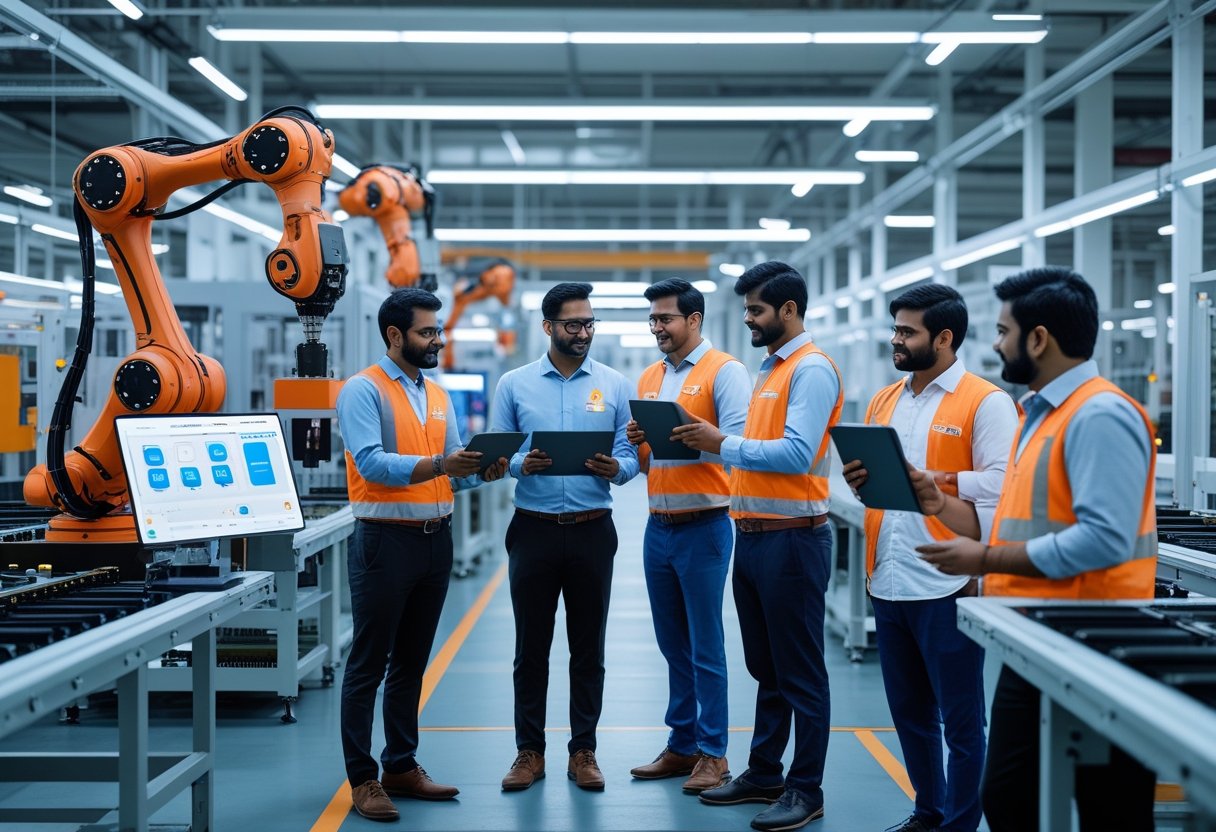
On-demand manufacturing means goods are produced only when you actually place an order. No more giant stockpiles gathering dust. The whole thing runs on digital platforms that connect you to networks of manufacturers who can quickly turn your designs into real parts.
Definition and Core Concept
It’s pretty straightforward: you order, they make. No minimum batch sizes, no pressure to buy more than you need.
This approach lets you get exactly what you want, when you want it. The digital platform sends your order out to the right manufacturer, who can usually start right away once they’ve got your specs.
Forget old-school constraints. Want just one prototype? Or maybe a handful of parts? That’s fine. This flexibility is a breath of fresh air for businesses trying to develop and test products without breaking the bank.
Key Components of On-Demand Manufacturing
Everything starts with digital ordering. You upload your CAD files to an online platform, which automatically checks your design and spits out a manufacturing quote—usually in minutes. It’ll show you costs, lead times, and material options right off the bat.
Behind the scenes, there’s a network of verified production facilities with all sorts of capabilities. Your order gets routed to the best match based on what you need. These networks keep quality levels up across the board.
Cloud-based software ties it all together. It manages orders, tracks production, and handles delivery. Algorithms help optimize the whole process, aiming for consistent quality no matter which facility picks up your job.
Manufacturing Processes Covered
CNC Machining covers milling, turning, and drilling. You can get precise metal or plastic parts with tight tolerances—great for prototypes or real, usable parts.
3D Printing brings options like FDM, SLA, and MJF. It’s perfect for complex shapes and fast prototyping, especially when you just need a few units.
Sheet Metal Fabrication handles things like bending, cutting, and forming. Think custom enclosures, brackets, and panels in steel, aluminum, or stainless.
Injection Molding is your go-to for higher-volume plastic parts. Some platforms even offer rapid tooling, so you can move from prototype to production without switching providers.
On-Demand vs Traditional Manufacturing Comparison
| Factor | On-Demand Manufacturing | Traditional Manufacturing |
|---|---|---|
| Minimum Order Quantity | No MOQ required, order single units | High MOQs, typically hundreds or thousands |
| Lead Time | Days to weeks | Weeks to months |
| Upfront Costs | Pay per part, no tooling investment | High tooling and setup costs |
| Inventory Requirements | Zero inventory, produce as needed | Large inventory storage required |
| Design Changes | Easy and cost-effective | Expensive and time-consuming |
| Production Flexibility | Switch between designs instantly | Locked into single design per run |
| Cost per Unit | Higher for large volumes | Lower with economies of scale |
| Risk Level | Low financial risk | High capital investment risk |
Traditional manufacturing means guessing demand, making big batches, investing in tooling, and hoping you can sell it all. That’s fine if you’re sure about your market, but it’s risky and expensive.
With on-demand, you pay only for what you make and can change quantities easily. Less waste, more cash in your pocket, and honestly, a lot less stress.
How On-Demand Manufacturing Works in India
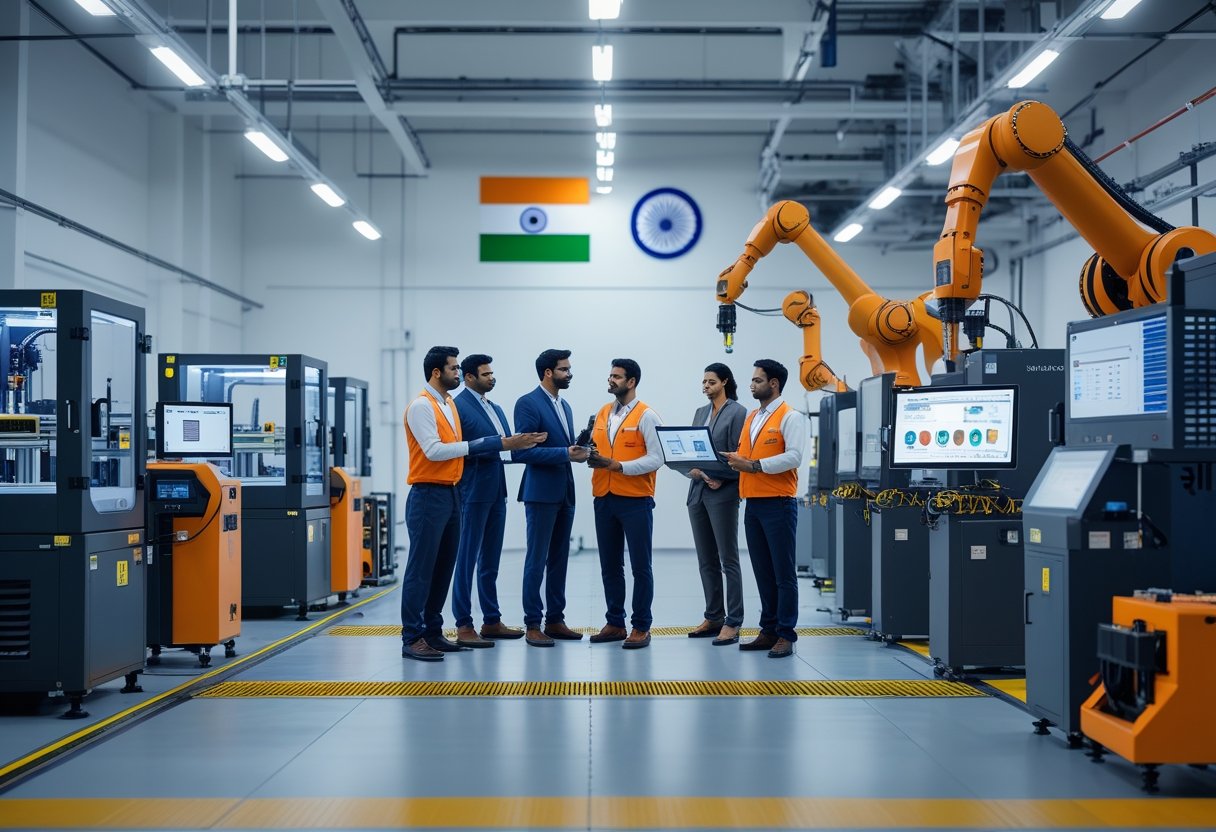
In India, on-demand manufacturing connects you to a network of vetted machine shops via digital platforms. These platforms handle quoting, partner matching, and keep an eye on quality. Your digital design files get transformed into real parts at manufacturing hubs in places like Pune, Coimbatore, and Bangalore.
Step-by-Step Process: From CAD to Delivery
You start by uploading your design file to a digital platform. The system checks your CAD file and sends it through an automated workflow. You’re matched with manufacturers who have the right tools and know-how for your job.
Once your project is assigned to a partner from the manufacturing network, production kicks off. You can watch progress online—no more guessing what’s happening with your order.
After manufacturing wraps up, the platform organizes quality checks and shipping. You get updates at every stage, from sourcing materials to delivery. Depending on what you order, the whole thing usually takes anywhere from two days to two weeks.
Upload Design and Get Instant Quote
Just upload your CAD file—formats like STEP, IGES, and STL are all fair game. The system crunches the numbers and gives you an instant quote, breaking down material, machining, and finishing costs.
You can tweak quantities, materials, or tolerances to see how the price changes. This is super helpful for budgeting and planning before you hit “go.”
Platforms like Partwork and others offer this instant quoting all over India. They’ll even flag manufacturability issues so you can fix them before production starts—saving time and headaches.
Material Selection and Manufacturing Partner Assignment
Once you’re happy with your quote, pick from available materials—aluminum alloys, stainless, brass, and a bunch of engineering plastics. Each option lists properties, certifications, and lead times.
Your order is then matched to a vetted machine shop. Partners go through quality audits and keep up with certifications. You might end up with a CNC machining shop in Pune for precision metal, or a Coimbatore workshop if you need bigger runs.
The system looks at equipment, workload, past jobs, and even location to find the best fit. This way, your parts land with the right manufacturer for the job.
Quality Control and Delivery
Every part gets checked before it leaves the shop. Verified machine shops stick to standard quality control steps, measuring critical dimensions, finishes, and tolerances.
You’ll often get inspection reports showing actual measurements. Need more documentation or third-party checks? You can ask for those, especially for critical applications.
Shipping is flexible—standard courier for small stuff, freight for big orders. The platform handles pickup and gives you tracking info. You can pick delivery speed based on your needs and budget.
India's Regional Manufacturing Landscape
Manufacturing in India tends to cluster in certain regions, each with its own specialty. Pune is big for CNC machining, automotive, and aerospace. Lots of ISO-certified shops and high-end equipment there.
Coimbatore is known for pump manufacturing, textile machinery, and general engineering—good prices for medium to high volumes, plus a strong talent pool.
Bangalore is the spot for high-tech, electronics, and prototypes. Gujarat handles chemical processing equipment and heavy machinery. Tamil Nadu is diverse—casting, forging, sheet metal, you name it. Chennai is handy for exports with its port access.
Benefits of On-Demand Manufacturing for Indian Businesses
On-demand manufacturing brings real, tangible benefits for your bottom line and day-to-day operations. You save money by skipping inventory, get products to market faster, and tap into advanced production tech without huge investments up front.
Cost Advantages and Savings
You’ll cut costs by avoiding big inventory stockpiles. Traditional manufacturing means guessing demand and tying up cash in products that might not sell. On-demand flips that script.
No minimum order quantities means you only pay for what you need. That slashes storage costs, reduces waste from overproduction, and frees up working capital for other priorities. Your cash flow improves since you’re not sitting on unsold goods.
Plus, you dodge the financial risk of inventory going obsolete. No more markdowns or disposal headaches. For small and medium businesses, this levels the playing field with bigger players.
Speed and Flexibility Benefits
Faster lead times help you react to the market. You can launch new products or variations without waiting forever for a big production run. That speed really changes how quickly you can go from idea to reality.
Rapid prototyping services in India let you test designs, get feedback, and fix problems early—while it’s still cheap to do so. Your development cycle shrinks, and you can iterate without burning months.
Flexible manufacturing means you can ramp up or scale down as needed. Got a seasonal spike? No problem. Slow period? Pull back. This kind of agility is worth its weight in gold.
Quality and Consistency Assurance
Modern on-demand manufacturers use advanced quality control at every step. Automated systems and up-to-date equipment keep tolerances tight and specs consistent. Digital workflows also cut down on human error that used to plague batch production.
Your products will match your specs every time, and you’ll get detailed reports to prove it. If there’s ever an issue, you can trace it right back to the source. That kind of transparency is reassuring, isn’t it?
Regular audits and certifications keep manufacturing partners honest. You get access to ISO-certified facilities and specialized expertise without having to build it all yourself.
Ready to see how on-demand manufacturing can shake up your business? Get a quote or start your next project with Partwork’s on-demand manufacturing platform.
Access to Advanced Manufacturing Capabilities
You get access to 3D printing, CNC machining, and injection molding without sinking a fortune into equipment. Cloud-based platforms connect you with manufacturers all over India who have the right tools and expertise. It's like renting an industrial workshop for each project, only when you need it.
This kind of access really levels the playing field—startups can try out advanced materials and production methods that used to be reserved for the big guys. Suddenly, your product ideas aren't limited by what you can afford to buy or build in-house.
Most digital platforms now come with workflow tools that handle the whole production process. You can track orders live, clarify specs, and keep your design files organized. All the tech infrastructure is baked right into the service.
Risk Mitigation and Business Agility
Scalable manufacturing helps you deal with unpredictable demand. If the market shifts, you won't be stuck with piles of unsold inventory. You can actually listen to customer feedback and adjust fast, which is kind of essential these days.
The on-demand model also shields you from supply chain chaos. If something goes sideways, you just switch manufacturers or move production. That kind of flexibility really proved itself during the recent global supply mess.
Testing new markets or launching products gets a lot less scary—you’re not pouring money into molds or tooling upfront. If something flops, you move on, no massive losses. Innovation feels a lot more possible when the stakes aren’t so high.
Industries Benefiting from On-Demand Manufacturing in India
On-demand manufacturing is having a moment across India’s industries—automotive, aerospace, healthcare, startups, you name it. Flexible production means lower inventory costs, faster prototyping, and the ability to pivot when the market throws you a curveball.
Automotive and Electric Vehicles
The automotive sector is probably the biggest adopter of on-demand manufacturing in India. You can get everything from simple brackets to complicated engine parts, all without stockpiling spares.
In the past, making auto parts here meant huge production runs. Now, you can order just a handful of specialized parts for repairs or custom jobs. It’s a game changer for dealerships and repair shops—less storage, faster turnaround.
On the EV front, the need for things like battery housings and custom brackets is exploding. On-demand lets you prototype new designs and tweak them as your vehicles evolve. That’s a big deal for both up-and-coming EV startups and established brands.
Partwork’s solutions are tailored for this space. You can test out different designs before going full-scale. For anyone entering the EV market, or even the big manufacturers, this flexibility is gold.
Aerospace and Defense Applications
Aerospace parts need to be spot-on, every time. On-demand services let you make replacement parts for older aircraft, even when the original supplier’s long gone.
Defense teams like that they can get classified components made locally. No more endless waits or risks tied to overseas suppliers. Small, specialized runs are now totally doable for unique equipment.
Materials like titanium and specialized alloys are available too, along with advanced manufacturing like CNC and additive. It’s handy for both keeping existing systems running and building new ones.
Medical Devices and Healthcare
Medical device makers in India have jumped on on-demand for custom implants and surgical tools. You can create patient-specific parts from CT or MRI scans—pretty wild, honestly.
Hospitals use these services to get rare tools or replacement parts for their machines. Fast production of biocompatible stuff means patients don’t wait forever for custom prosthetics or dental work.
Prototyping is huge here too. Medical device companies can tweak and test designs based on real clinical feedback, without the old-school cost of tooling. That speed matters when health needs change fast.
Just a heads-up: you’ll want to double-check that your manufacturer has the right certifications for medical stuff. No shortcuts there.
Electronics and Robotics
The electronics world always needs custom enclosures, heat sinks, or mounting bits. Small batches of unique parts for control systems or gadgets are right in the sweet spot for on-demand.
Robotics is even more particular. Maybe you need a custom gripper or a sensor mount designed for one specific job. On-demand lets you play with different materials and shapes to get your robot just right.
Partwork’s electronics offerings mean PCB enclosures or connector housings can go from design to finished part in days, not weeks. That’s pretty much a must in tech, where speed is everything.
Industrial Machinery and Equipment
Old manufacturing machines break, and the original parts might not exist anymore. On-demand is perfect for getting replacements fast, so your line isn’t down for weeks.
Maintenance teams love this—custom parts show up in days, not months. That keeps production rolling and avoids costly downtime.
Custom tooling and fixtures are another win. You can design jigs for your process, then tweak or reorder them as things change. It’s all about keeping operations flexible.
Startups and Product Development
For startups, on-demand manufacturing is a lifeline. You can build and test products without sinking money into your own factory or big minimum orders.
Prototyping services in India now give you access to real-deal manufacturing, so you can validate designs before pitching investors or launching. It keeps your risks low when you’re just starting out.
As your business grows, you can scale production batch by batch, matching expenses to revenue. That’s a lot easier on your cash flow.
Hardware startups especially love the variety. You can mix and match 3D printing, CNC, and sheet metal, all without juggling a dozen suppliers.
Materials Available for On-Demand Manufacturing in India
India’s on-demand manufacturing scene offers a solid range of metals, alloys, and engineering plastics for CNC, 3D printing, and other processes. Both off-the-shelf and specialty materials are easier to get now, though prices and wait times depend on what you need and who’s supplying it.
Carbon Steels and Mild Steels
Carbon steels are everywhere in Indian manufacturing—affordable, easy to find, and versatile. EN8 steel machining is a go-to for general engineering when you need moderate strength.
EN8 (like AISI 1040) is easy to machine and can be heat treated for extra hardness. You’ll see it in shafts, bolts, studs, and all kinds of machine parts. Most CNC shops keep EN8 in stock—round bars, flat bars, sheets, you name it.
Other grades like EN3 and EN9 are around for jobs that need less or more carbon. They’re good for welding or case hardening, and the price makes them a favorite for prototypes or mid-sized production runs.
Alloy Steels and Tool Steels
Alloy steels beef up mechanical properties with elements like chromium or nickel. EN19 EN24 machining are top picks for tough jobs.
EN19 (close to AISI 4140) is stronger and more wear-resistant than carbon steel—great for gears or axles. EN24 (like AISI 4340) goes even further, used in critical auto and aerospace parts that take a beating.
Tool steels—think D2, D3, H13, P20—are for dies, punches, and cutting tools. They’re harder to machine and pricier, so expect longer lead times and higher costs.
Stainless Steel Grades
Stainless steel machining in India is getting more popular as demand for corrosion-resistant parts rises. The 300 series (austenitic) is everywhere—SS304 SS316 parts are the most common.
SS304 (18% chromium, 8% nickel) is the standard for food, medical, and chemical gear. It machines easily and is widely available. SS316 adds molybdenum, so it’s better against chlorides and acids—ideal for marine or pharma uses.
You’ll also see SS310, SS321, and duplex grades like 2205 from specialty suppliers. Ferritic (SS430) and martensitic (SS420) grades fill niche needs where magnetism or hardening matter. Stainless is pricier than carbon steel, usually three to five times more.
Aluminum Alloys
Aluminum CNC services in India focus on the 6000 series, which balances machinability and strength.
Aluminum 6061 is the workhorse for structures, brackets, and housings. It resists corrosion, can be anodized, and the T6 temper is the strongest. Most shops keep it on hand, so prices and lead times are good.
The 7000 series (7075 especially) is tougher, used in aerospace and performance parts, but it’s pricier and less common. The 2000 series is good for strong, machinable parts. Cast aluminum like LM6 or LM25 works for jobs where tolerances aren’t super tight.
Brass, Copper, and Bronze
Brass machining is a breeze, especially with free-cutting grades. These copper alloys are big in electrical, plumbing, and decorative work.
Brass 360 is about as machinable as it gets—great for fittings, valves, and precision parts. Brass 464 (naval brass) stands up to salty, wet environments.
Pure copper (C101, C110) is around for electrical and cooling parts, but it’s soft, so machining takes care. Bronze alloys like phosphor bronze or aluminum bronze are go-tos for bushings and gears. Standard copper alloys are moderately priced and pretty available.
Engineering Plastics
More manufacturers are turning to engineering plastics for lighter, corrosion-proof parts. Popular options: acetal (Delrin), nylon, PEEK, polycarbonate, UHMW.
Acetal is stable and slick—perfect for gears and bushings. Nylon 6 and 66 are tough and wear-resistant. PEEK handles crazy high temps (up to 250°C), so it’s big in aerospace and medical, but it’s not cheap.
ABS and polycarbonate are solid for impact-resistant housings. PTFE (Teflon) is great for chemical resistance and low friction, but it’s tricky to machine. Plastics are generally cheaper and faster to machine than metals, and you don’t need coolants.
Specialty Materials (Titanium, Superalloys)
Titanium machining is possible in India, but only at shops with the right setup. Ti-6Al-4V (Grade 5) is the mainstay for aerospace, implants, and racing parts.
Titanium’s got a killer strength-to-weight ratio and is biocompatible, but it’ll cost you—way more than steel or aluminum. It needs sharp tools, rigid setups, and careful cooling. Lead times are longer because material is limited and machining is slow.
Superalloys like Inconel 718 or Hastelloy are used in extreme heat or corrosive places. They’re tough to machine, needing special carbide or ceramic tools. Only a handful of shops—think aerospace or power—handle these materials.
Technology Driving On-Demand Manufacturing
Modern tech is what makes on-demand manufacturing work in India. Digital platforms, automated machines, and quality control systems help you get parts made fast and right, without all the old hassle.
Ready to bring your ideas to life? Try Partwork’s on-demand manufacturing—get a quote, upload your design, and start building today.
Digital Platform and Instant Quoting Technology
Digital manufacturing platforms give you direct access to production facilities all over India. You just upload your CAD files and, within minutes, you get an instant quote—no more waiting days for someone to email you back. These platforms use algorithms to analyze your design and crunch the numbers for material, machine time, and part complexity.
The instant quote tech dives into your part geometry and suggests the best way to manufacture it. You can check prices for different materials and processes before you order. Some platforms even have DFM analysis India tools that flag design issues and recommend tweaks to save you money.
On these platforms, CAD to CAM India conversion happens automatically. Your 3D model turns into machine instructions—no manual programming, no back-and-forth. That means production kicks off faster and you avoid errors from file conversions.
CNC Machining Capabilities
CNC machining technology India has leveled up with multi-axis machines and automated tool changers. You can get parts made from metals like aluminum, steel, or plastics like ABS and nylon. Modern CNC centers often run around the clock with little human intervention.
Shops now use automation for loading and unloading parts. Machines can switch between jobs mid-run, which makes small batch orders surprisingly affordable.
Partwork technology and similar systems handle quoting, production scheduling, and even real-time status updates. The machines talk to the platform, so you know exactly where your order stands.
3D Printing Technologies
3D printing services India offer a bunch of options—FDM, SLA, SLS, you name it. Each one works with different materials and gives you different finishes. FDM is great for functional plastic prototypes. SLA gives you smooth resin parts. SLS is the go-to for tough nylon components.
You can order 3D printed parts for prototypes or final products. Since there’s no tooling, you get super fast turnaround. Wild, complex shapes that are a headache to machine? 3D printing handles them easily.
Metal 3D printing’s here too, mostly for aerospace and medical. These machines use lasers or electron beams to fuse metal powder into solid parts. Pretty futuristic, honestly.
Quality Assurance and Inspection Systems
Quality control now leans heavily on digital tools and automation. CMM machines measure parts to within a few microns. They touch hundreds of points on your part and compare them against your CAD model.
Automated visual inspection uses cameras and AI to spot surface defects. These systems are way faster than people and catch issues before shipping. You get inspection reports with measurements and certifications.
Some shops use in-process monitoring—sensors check parts while they’re still being machined. They track tool wear and dimensions as production happens, so mistakes get caught early and scrap is minimized.
On-Demand Manufacturing vs Traditional Manufacturing in India
Traditional manufacturing in India is all about bulk production and big minimum orders. On-demand manufacturing, on the other hand, only makes what you actually order. Which you choose changes your costs, speed, and how quickly you can react to the market.
Cost Comparison Analysis
With traditional manufacturing, you’re putting down a hefty upfront investment for tooling, machines, and storage. You might be out lakhs of rupees before you even make one part. That only makes sense if you’re producing thousands of units to spread out the cost.
On-demand manufacturing skips all that tooling. You pay per part, no molds or dies to worry about. For orders under 10,000 units, this often works out cheaper overall.
Traditional Manufacturing Costs:
- High initial tooling investment (₹2-10 lakhs+)
- Warehouse rental and maintenance
- Inventory carrying costs
- Risk of unsold stock
On-Demand Manufacturing Costs:
- Higher per-unit price
- No tooling investment
- No inventory storage needed
- Payment only for produced units
The cost tipping point depends on volume. Traditional gets cheaper at scale, but on-demand is a lifesaver for smaller production runs.
Lead Time and Production Speed
Traditional manufacturing in India can drag on—weeks just to get started. Tooling, supplier haggling, setup... the whole process from order to delivery can stretch 6-12 weeks.
On-demand? You can kick off production within days. Digital manufacturing cuts setup time way down. Most items arrive in 1-3 weeks, which is a huge deal if you’re trying to launch or pivot fast.
If you need to move quickly or test new products, traditional shops just aren’t built for that pace. Platforms like Partwork let you react without waiting months.
Minimum Order Quantities (MOQ)
Traditional manufacturing in India usually means big MOQs—think 5,000 to 50,000 units, minimum. That’s a tough pill to swallow for startups or anyone without deep pockets.
On-demand manufacturing often has no MOQ, or at worst, a low one. Order 10 units, order 1,000—whatever fits your needs. You can test the waters before diving in.
MOQ vs no MOQ isn’t just a technicality—it hits your cash flow directly. Traditional ties up your money in inventory that might just sit there. On-demand lines up production with real orders, so you’re not left holding the bag.
Flexibility and Design Changes
With traditional manufacturing, once you’ve made the tooling, you’re locked in. Changing the design? That’s new molds, more money, and more waiting. You have to nail every detail before you start.
On-demand lets you tweak the design between batches. Customer feedback? Market shift? You can update the digital files and the next run reflects your changes. No wasted inventory, no sunk costs.
This flexibility is huge for new products. You can keep improving as you go, instead of getting stuck with what you started with.
When to Use Each Approach
Go with on-demand manufacturing if you’ve got complex designs, expect to make changes, or you’re producing less than 10,000 units a year. It’s great for testing, custom jobs, and if you don’t want to tie up a ton of cash.
Traditional manufacturing works when your product design is stable and you’re making 50,000+ units a year. If you know you’ve got demand and want the absolute lowest per-unit price, that’s the way to go.
Use On-Demand For:
- New product launches and testing
- Custom or personalized items
- Seasonal products with uncertain demand
- Orders under 10,000 units
Use Traditional For:
- Established products with steady demand
- Simple designs with no expected changes
- Annual volumes exceeding 50,000 units
- Lowest possible per-unit cost priority
Your choice depends on how complicated the product is, how many you need, your budget, and how sure you are about demand. Some businesses mix both methods for different lines—it’s not always an either/or thing.
Cost Factors in On-Demand Manufacturing
Knowing what actually drives cost in on-demand manufacturing helps you make smarter calls about your parts. Material selection, machining complexity, quality standards, and order size all play a part in your final price.
Material Costs in Indian Market
Material prices swing a lot in India. Aluminum is one of the cheapest for CNC—usually ₹400 to ₹800 per kg, depending on grade. Stainless steel runs higher because it’s tougher and wears out tools faster. Expect ₹600 to ₹1,200 per kg for common grades like 304 or 316. Exotic stuff like titanium? That can jump to ₹3,000 to ₹8,000 per kg.
India’s got a cost edge over Western countries—materials here are often 30-40% cheaper. Still, prices do jump around based on global markets and local demand.
Common Material Price Ranges:
| Material | Price per kg (₹) |
|---|---|
| Aluminum 6061 | 400-600 |
| Stainless Steel 304 | 600-900 |
| Mild Steel | 80-150 |
| Brass | 500-700 |
| ABS Plastic | 200-350 |
Machining Time and Complexity
CNC machining costs in India depend a lot on how long your part takes to make. Machine time runs from ₹800 to ₹3,000 per hour, depending on the machine and the precision you need.
Simple shapes are fast and cheap. Complicated parts with deep pockets or tricky features take longer—more tool changes, slower speeds. A basic bracket might be done in 15 minutes, but a complex engine part could eat up 3-4 hours.
Your geometry matters. Undercuts, thin walls, multiple setups—they all add time and cost. Programming for complex parts adds ₹500 to ₹2,000, depending on how tricky it is.
Tolerance and Surface Finish Impact
Tighter tolerances cost more. Standard ±0.1mm is fine for most uses and keeps costs down.
If you ask for ±0.01mm or better, you’re looking at 20-40% extra. Precision work needs slower machining, more checks, and sometimes special equipment. For tiny features (under 5mm), the price jump is even bigger.
Surface finish matters, too. Standard mill finish is included, but if you want Ra 1.6 or better, expect 15-30% more for extra finishing.
Tolerance and Finish Cost Multipliers:
- Standard (±0.1mm, mill finish): 1.0x base cost
- Medium (±0.05mm, Ra 3.2): 1.2-1.3x base cost
- Precision (±0.01mm, Ra 1.6): 1.4-1.6x base cost
- Ultra-precision (±0.005mm, Ra 0.8): 2.0-2.5x base cost
Volume Discounts and Pricing Examples
Volume discounts really kick in when you order more. The more units you make, the less each one costs—setup time gets spread out.
A one-off prototype might be ₹2,000 to ₹5,000 because you pay all the setup. Order 100 pieces and it drops to ₹400–₹800 each. At 1,000 units, maybe just ₹200–₹400 per part.
Most shops start giving better rates at 10–25 pieces. The biggest savings come between 50 and 500 units, then it flattens out.
Instant pricing tools and machining cost calculators show you where the volume breaks are. Platforms like Partwork let you play with quantity to see how the price shifts.
Real Cost Examples for Common Parts
A simple aluminum mounting bracket (100mm x 50mm x 10mm) with basic holes might run ₹300–₹500 for one piece. Order 50 and it’s more like ₹120–₹180 each.
An aluminum enclosure (150mm x 100mm x 75mm) with pockets and threads could be ₹1,500–₹2,500 for a prototype. At 100 pieces, that drops to ₹450–₹700 per unit.
A stainless steel shaft (200mm long, 25mm diameter) with turning features costs ₹800–₹1,200 per piece if you just want one. Order 100 and it’s ₹250–₹400 each.
Complex parts—like custom gearboxes or manifolds with lots of features—can be ₹5,000–₹15,000 for prototypes. Production runs of 50+ units usually land between ₹1,500–₹4,000 per piece, depending on what you need.
All these India part pricing examples assume standard tolerances and finishes. If you want premium specs or fancy materials, add 20–50% on top.
Need custom parts, prototypes, or small-batch production without the hassle? Try Partwork's on-demand manufacturing—get instant quotes, fast turnaround, and real-time updates. Start your project now.
Future of On-Demand Manufacturing in India
India's on-demand manufacturing scene is changing fast, thanks to digital tech, automation, and a growing focus on sustainability. Over the next few years, expect the market to get a lot bigger, with advanced manufacturing systems and increased government backing for digital production.
Market Growth and Projections
Manufacturing makes up about 16-17% of India's GDP, and on-demand production is carving out a bigger slice of the pie. The pace is picking up as more small and midsize businesses try out flexible manufacturing setups.
Customization and waste reduction are pulling global companies into India's manufacturing ecosystem. With on-demand, you can get shorter production cycles and keep inventory costs down.
Analysts say India's global manufacturing status will get a solid boost by 2028. Make in India 3.0 is all about better design, higher quality, and digital skills that fit right in with on-demand.
Key growth drivers:
- More demand for custom products across industries
- Lower upfront costs to start producing
- Smoother integration with global supply chains
- SMEs adopting on-demand to stay competitive
Technology Trends and Industry 4.0
AI and machine learning are shaking up how production is managed in Indian factories. These tools cut down on manual work and boost efficiency and accuracy.
Smart factories lean on data to fine-tune production schedules and how resources are used. With connected sensors and analytics, you can keep tabs on your whole line in real time.
3D printing lets you make complex parts on demand without shelling out for pricey tooling. Lead times shrink from weeks to days, and there are no minimum order headaches.
Digital platforms connect you straight to manufacturers for fast quotes and hassle-free ordering. Automation handles the repetitive stuff, so people can focus on the tricky bits.
Industry 4.0 tech making waves:
- AI-powered quality control – Automated defect spotting and process tweaks
- IoT sensors – Real-time tracking of machines and materials
- Cloud-based manufacturing – Remote access to production data and controls
- Digital twins – Virtual simulations for testing before making real parts
Government Initiatives Supporting Digital Manufacturing
The government's Production Linked Incentive schemes are nudging manufacturers to go digital and automate. These programs offer financial help for upgrades.
Make in India 3.0 pushes for more tech and design capabilities. There are subsidies for R&D that can improve your production methods.
Shared innovation hubs are popping up so smaller manufacturers can tap into expensive tech like 3D printing and prototyping, without blowing their budgets.
Policies now aim to make manufacturing more nimble and ready for export. Budgets are being set aside for design-led innovation to help Indian companies compete globally.
Sustainability and Green Manufacturing
Green practices aren't just a nice-to-have anymore—they're becoming standard. On-demand production naturally cuts down waste by making only what's needed.
Digital manufacturing helps lower your carbon footprint by reducing material waste and energy use. 3D printing and precision processes really help with this.
Being sustainable often means you run more efficiently and spend less. Digital tools make it easier to track resources and spot ways to waste less.
Sustainability perks:
- Less wasted inventory
- Lower transport emissions thanks to local production
- Reduced energy use with smarter processes
- Better material usage with precise manufacturing
How to Choose an On-Demand Manufacturing Platform in India
Your choice of manufacturing platform can make or break your product's quality, costs, and delivery times. It's worth looking for platforms with a solid manufacturing network, honest pricing, good quality controls, helpful support, and tech that's easy to use.
Evaluating Manufacturing Network and Capabilities
See if the platform works with verified manufacturers across India. You want a network that matches your needs—CNC machining, 3D printing, sheet metal, injection molding, whatever's on your list.
Ask how they vet their manufacturers. Top platforms check for certifications, equipment quality, and track record. It helps you avoid unreliable partners.
Production capacity matters too. Some platforms are great for prototypes, others can handle big runs. Make sure they match your volume requirements.
Having manufacturers in different cities gives you backup if there are delays or quality hiccups. It's not just about convenience; it's risk management.
Pricing Transparency and Hidden Costs
Go for platforms that give you instant quotes—no endless negotiations. Transparent pricing means you see costs up front, no surprises.
Watch out for these hidden charges:
- Setup fees for new jobs
- Rush charges for quick turnarounds
- Revision fees if you tweak your design
- Shipping that's not included in the quote
- Payment processing or currency conversion fees
Compare quotes from a few platforms using the same specs. Some look cheap at first but sneak in extra fees later. Ask if there are subscription or commission charges. The pricing should be clear from the start.
Quality Assurance Standards
Quality control is a must. Find out if the platform inspects parts before shipping or just trusts the manufacturer.
Good platforms send inspection reports, material certs, and photos of finished parts. That way, you know you got what you paid for.
Ask what happens if parts fail checks. The platform should handle returns and refunds, not leave you to haggle with the manufacturer. Look for ISO-certified suppliers or platforms with solid quality standards.
Customer Support and Engineering Assistance
Test out their support before placing a big order. Send a question and see how fast and helpful the reply is. You should get a real answer within a day for normal queries.
Some platforms offer engineering help to tweak your designs for manufacturing. This can save you money and improve quality. Ask if they do DFM reviews for free.
Support should be available in your language and during your working hours. Local knowledge makes a difference. Also, make sure you have a dedicated contact for your order, not just a generic email address.
Technology and User Experience
The platform should make it easy to upload designs, get quotes, and track orders. Try getting a quote for a test part; it shouldn't take ages.
Look for features like:
- Instant quoting for standard jobs
- Order tracking with real-time updates
- Support for common CAD files (STEP, STL, DXF)
- Material libraries with clear options
- Finish specs for surface treatments
Platforms using automated design analysis are a plus—they flag issues before production starts. Saves everyone a headache. Mobile access is handy too, especially if you need to check orders on the go.
Getting Started with On-Demand Manufacturing
Jumping into your first on-demand manufacturing project? Start by prepping your files and spelling out your requirements. Once you upload everything, production can kick off in days, not weeks.
Preparing Your CAD Files
Your CAD files are the backbone of your order. Before uploading, double-check that your design is finished and includes all the right dimensions, tolerances, and specs.
Most platforms take standard CAD formats—STEP, IGES, STL, or files from SolidWorks and Fusion 360. STEP files are usually the safest bet for most jobs.
Clean up your files: delete any unnecessary features or duplicate surfaces. Make sure wall thickness is reasonable and features can actually be made at your chosen scale.
If your project is an assembly, label each part clearly. Even if the 3D model has the info, include a technical drawing with must-have dimensions and tolerances.
Defining Your Requirements
Be specific before you ask for a quote. Choose your material based on what the part needs to do and where it'll be used.
List the quantity you want—prototype, small batch, or big run. Mention your delivery date and whether you have any wiggle room in your timeline.
State exactly what finish you need. Is it as-machined, bead blasted, anodized, powder coated? Note if only certain faces need special treatment.
Highlight critical dimensions and tolerances. Use tight tolerances only where absolutely necessary—they add to cost. If you need docs like material certs or inspection reports, say so upfront.
Uploading and Getting Your Quote
Uploading your files is quick and easy on most platforms. Set up an account, head to the quote section, and upload your CAD files.
Many platforms will scan your files and pick up key features. Fill in the blanks for material, quantity, and finish. Some give you an instant quote, others follow up within a day.
Check the price breakdown and lead times. If anything's unclear, ask questions before placing your order. It's better to clear things up now than deal with surprises later.
Reviewing DFM Feedback
Design for Manufacturing (DFM) feedback is your friend. Engineers will flag things like thin walls, deep pockets, or sharp corners that might cause trouble.
Some DFM comments are must-fix, others are just suggestions to save cash. Decide what matters for your part and budget. If something in the feedback doesn't make sense, ask for clarification and update your files as needed.
Best Practices for First-Time Users
Start small. Order a prototype before committing to a big batch. It's the best way to check fit and finish without risking a lot of money.
Give yourself extra time for your first projects—unexpected hiccups happen. Quick, clear communication with your manufacturer can prevent most delays.
Keep a record of everything: specs, quotes, changes, and emails. It makes reordering or troubleshooting way easier later.
When your parts arrive, check them carefully against your requirements. Share feedback with your manufacturer—what worked, what didn't. It helps both sides improve for next time.
Ready to get started? Bring your next part to life with Partwork's on-demand manufacturing—upload your design and see how easy it can be.
On-Demand Manufacturing in India: A Real-World Shift
On-demand manufacturing in India is changing the way businesses approach production. It’s not just about reducing waste or cutting costs—though those are big perks—but about reacting fast when the market throws you a curveball.
Digital manufacturing tools let you stay in the game with less up-front risk. Instead of sinking tons of money into equipment you might not need, you get access to cutting-edge tech and can launch new products or tweak designs without waiting months for feedback. It’s a pretty flexible setup, honestly.
Why people are switching:
- Order custom parts in India, no huge minimums
- Slash storage costs—make only what’s actually needed
- Prototype quickly and get to market before your competitors
- Tap into a network of skilled manufacturers across India
With a manufacturing platform in India, you’re not stuck with one supplier. You can check prices, review quality standards, and pick the right partner for each job. No more endless back-and-forth or mystery quotes.
Platforms like Partwork bring everything together, from uploading your design to tracking your order. You choose your materials, set specs, and follow progress in real time. It’s all a bit more transparent than the old-school approach.
Adopting on-demand manufacturing does mean rethinking how you do things. Maybe start with a single project to see how it fits. Some processes will need more flexibility than others—no sense overhauling everything at once if you don’t have to.
Picking the right partners is key. Not every provider is a good fit, so ask questions about lead times, quality checks, and what they’re actually good at. A little research goes a long way.
Frequently Asked Questions
Find answers to common questions about this topic
What are the most prominent on-demand manufacturing services available in India as of 2026?
India’s got a strong lineup: CNC machining, 3D printing, injection molding, and sheet metal fabrication are the main players. These services have really taken off thanks to more government support and a growing talent pool. You’ll find providers who focus on rapid prototyping and small-batch runs. Some even throw in design help or quality testing, which can save you time and hassle.
How does on-demand manufacturing contribute to supply chain efficiency in the Indian market?
It cuts down on inventory costs since you’re only making stuff when someone actually orders it. No more paying for giant warehouses or stressing about overproduction. You can pivot quickly if the market shifts or customers ask for something different. Plus, you’re not stuck with piles of unsold products. Lead times shrink because manufacturers are working on real orders, not just filling up shelves. And your cash isn’t tied up in stock you might never sell.
What materials are available for CNC machining and 3D printing?
CNC machining in India covers metals like aluminum, steel, brass, and copper, plus plastics like ABS, nylon, and acrylic. 3D printing gives you options like PLA, ABS, PETG, and various resins. Some services can handle engineering plastics or even metals like titanium and stainless steel, if your project needs something tougher. Material choice really depends on what you’re making—some projects need strength, others care more about finish. Most providers will have specs handy if you’re not sure what to pick.
What industries commonly use on-demand manufacturing in India?
Automotive companies use it for custom parts and prototyping, especially those working on electric vehicles. Healthcare and medical device makers rely on it for specialized equipment and implants. Chemical companies order custom containers and processing gear as needed. Consumer electronics brands use on-demand for testing new products or launching limited editions. Aerospace, robotics, and industrial equipment sectors are also in the mix, looking for specialized, low-volume parts.
What are the cost implications of adopting on-demand manufacturing for businesses in India?
Per-unit costs can be higher than mass production, since you’re not getting huge volume discounts. But you’re not paying for storage, unsold stock, or outdated products either. When you look at the big picture—less waste, lower up-front costs, and only paying for what you need—it starts to make sense, especially for smaller businesses. You don’t need a massive investment to get started, and your total costs can actually drop, even if the price per part is a bit higher. Ready to make your next part or product? Try Partwork’s on-demand manufacturing—upload your design, pick your material, and get a quote, all in minutes.
Can I get samples before placing bulk orders?
Most on-demand manufacturers in India will let you order samples before you dive into a big commitment. It’s a smart way to check the quality, fit, and how everything comes together—nobody wants surprises down the line. You’ll usually pay the regular small-batch price for samples, though some folks might cut you a deal if you’re planning bigger orders later. It never hurts to ask. Sampling gives you a chance to spot design quirks or mistakes early, and tweak things without risking a ton of money. You can try out a few versions and see what actually works in the real world. Curious about on-demand manufacturing? Partwork can help you get started—reach out for samples or a quote today.